
Breaking News
Real-time threat intelligence stories as they unfold. Tracked, analyzed, and updated by Mallory so you don't miss what matters.
Today

North Korea-Linked Supply Chain Attack Compromised Axios NPM Package
Google Threat Intelligence Group reported that a financially motivated North Korea-linked actor, tracked as **UNC1069**, compromised widely used **`axios`** NPM package versions **`1.14.1`** and **`0.30.4`** as part of a software supply chain attack that also involved **`plain-crypto-js`**. The campaign delivered **WAVESHAPER.V2**, a Windows remote access trojan that establishes persistence through a hidden batch file in **`%PROGRAMDATA%`** and a **`MicrosoftUpdate`** Run key in **`HKCU`**, then conducts reconnaissance, executes arbitrary commands, performs in-memory PE injection and PowerShell-based execution, and recursively enumerates the file system. Investigators linked the activity to UNC1069 through infrastructure overlaps, including **`sfrclak[.]com`** resolving to **`142.11.206.73`**, and connections from an AstrillVPN node previously associated with the actor. Google warned that secrets stolen through the poisoned packages could enable downstream SaaS compromise, ransomware, extortion, and cryptocurrency theft, and urged organizations to avoid the affected axios versions, audit dependencies, rotate credentials, block the identified command-and-control infrastructure, and harden development and CI/CD environments.

TeamPCP Supply Chain Breaches Expand Into Ransomware-Linked OSS Campaign
TeamPCP has expanded a multi-ecosystem software supply chain campaign that compromised open-source security and developer tools including **Trivy**, **Checkmarx KICS**, **LiteLLM**, **Telnyx**, GitHub Actions, OpenVSX extensions, Docker images, and packages published through **PyPI** and **npm**. Reporting indicates the attackers used stolen developer and publishing credentials to push malicious releases through trusted channels, harvest environment variables, shell histories, cloud credentials, and GitHub tokens, and move laterally across CI/CD environments. In the Telnyx incident, valid credentials were reportedly used to publish malicious PyPI releases, with a second-stage payload hidden in a WAV file and code triggered on import. The campaign is now being linked to follow-on ransomware activity through an alleged partnership between TeamPCP and the **Vect** ransomware group, which has been advertised on BreachForums as an emerging ransomware-as-a-service operation. Researchers say the supply chain compromises may serve as initial access for extortion campaigns against downstream organizations, with TeamPCP reportedly recruiting negotiators after the Trivy breach and previously exfiltrating roughly **300 GB** of compressed credentials; the LiteLLM compromise alone was tied to hundreds of thousands of stolen credentials. The incidents underscore how compromised open-source tooling and CI/CD infrastructure can give attackers privileged enterprise access and create a path from package poisoning to ransomware deployment.

Suspected Exploit Drains Drift Protocol Vault and Triggers Deposit Halt
Drift Protocol, a Solana-based perpetuals DEX, is investigating suspicious activity after roughly **$270 million** moved rapidly out of its main vault across more than 15 token types. The vault balance reportedly fell from about **$309 million to $41 million**, with most assets sent to a single unlabeled address and another **125,000 WSOL** transferred to a second unlabeled wallet. On-chain observers said the recipient appeared to be swapping assets into ETH, while the scale and speed of the transfers resembled a broad vault drain rather than normal user withdrawals. Drift told users to **halt deposits** while the investigation continues, and no independent security analysis had confirmed the root cause at the time of reporting. The incident shook Solana DeFi markets because Drift held about **$550 million in total value locked**, meaning nearly half of the protocol’s TVL moved in a short burst. The protocol’s **DRIFT** governance token fell more than 20%, briefly dropping to around **$0.045-$0.05** before stabilizing near **$0.06**, while **SOL** also came under pressure amid renewed concerns about security risks in the ecosystem.

Tenda AC10 Firmware Flaws Expose httpd Password Handler to Remote Buffer Overflow
Two high-severity vulnerabilities, **CVE-2026-5548** and **CVE-2026-5550**, were disclosed in **Tenda AC10** firmware `16.03.10.10_multi_TDE01`, both affecting the `/bin/httpd` component. The flaws are stack-based buffer overflows in the `fromSysToolChangePwd` function, where crafted input to the `sys.userpass` argument can trigger memory corruption during password-change handling. Both entries classify the issue under **CWE-119** and **CWE-121** and indicate the vulnerabilities can be exploited remotely. Severity metadata attached to the CVE records shows high impact on **confidentiality, integrity, and availability**, with CVSS v3.1 scoring reflecting **network attackability**, **low attack complexity**, **low privileges required**, and **no user interaction**. The disclosures were accompanied by references to a GitHub technical finding, VulDB records, and Tenda-related resources, indicating that multiple endpoints tied to the same password-management code path may be exposed in affected devices.

Fortinet FortiClient EMS Zero-Day Lets Unauthenticated Attackers Take Control
Fortinet issued an emergency hotfix for a critical zero-day in **FortiClient EMS** that was being actively exploited in the wild. The vulnerability, tracked as `CVE-2026-35616` and documented in advisory `FG-IR-26-099`, affects FortiClient EMS versions **7.4.5** and **7.4.6** and allows an unauthenticated remote attacker to bypass API authentication and authorization. Fortinet rated the flaw **9.1 CVSSv3** and mapped it to **CWE-284 Improper Access Control**, warning that exploitation can enable arbitrary code or command execution and full control over endpoint management operations. The issue was reported by **Simo Kohonen** of Defused and independent researcher **Nguyen Duc Anh**, with Defused identifying exploitation activity before public disclosure. Fortinet said **7.2.x** is not affected, released hotfixes, and indicated that **7.4.7** will include the permanent fix. Organizations were urged to patch immediately, review EMS logs for suspicious unauthenticated API activity, and restrict external access to the EMS management interface wherever possible.

Google Research Lowers the Bar for Quantum Attacks on Bitcoin and Ethereum
Google Quantum AI reported that breaking the `secp256k1` elliptic-curve cryptography used by Bitcoin, Ethereum, and other cryptocurrencies may require far fewer quantum resources than previously estimated. In a new whitepaper co-authored with researchers from the Ethereum Foundation, Stanford, and UC Berkeley, the team said an attack could need fewer than 500,000 physical qubits rather than the millions often cited, with optimized circuits using roughly 1,200 to 1,450 high-quality logical qubits. Under idealized conditions, the research suggests a primed attacker could recover a private key in about nine minutes, making an on-spend attack against a Bitcoin transaction theoretically possible within the network’s typical 10-minute confirmation window. The paper warns that Bitcoin’s 2021 **Taproot** upgrade may have increased long-term quantum exposure by making public keys visible on-chain by default, and estimates that about **6.9 million bitcoin** are already held in wallets with exposed public keys. Google said it did not publish the attack circuits, instead releasing a zero-knowledge proof using **SP1 zkVM** and **Groth16** so the results could be validated without providing weaponizable details, and said it notified the U.S. government before publication. While the researchers stressed that no cryptographically relevant quantum computer exists today, they argued that the engineering threshold for attacking ECC-based blockchain systems is materially lower than expected and called for migration toward post-quantum cryptography across cryptocurrency ecosystems.

TeamPCP Compromised Trivy and Turned CI/CD Pipelines Into Credential Theft Channels
A supply-chain attack against Aqua Security’s **Trivy** ecosystem let attackers publish malicious artifacts and hijack GitHub Action tags, turning a widely used security scanner into a credential stealer. Reporting indicates the intrusion began with abuse of a misconfigured GitHub Actions workflow and theft of privileged credentials, followed by incomplete containment that left residual access in place. Attackers then poisoned **`aquasecurity/trivy-action`** by force-updating 75 of 76 tags, compromised **`setup-trivy`**, and published a backdoored **Trivy `v0.69.4`** release; later activity also pushed malicious Docker Hub images **`0.69.5`** and **`0.69.6`**. The malware harvested GitHub tokens, cloud credentials, SSH keys, Kubernetes secrets, Docker configs, and other CI/CD data from runners and developer environments, encrypted the loot, and exfiltrated it to attacker-controlled infrastructure or fallback GitHub repositories such as **`tpcp-docs`**. Researchers and vendor advisories linked the campaign to **TeamPCP** and described it as an expanding, multi-stage operation that also included a brief OpenVSX compromise of the Trivy VS Code extension, defacement of **44** repositories in Aqua Security’s internal **`aquasec-com`** GitHub organization, and follow-on compromises affecting Checkmarx tooling and the **LiteLLM** PyPI package. Aqua removed malicious artifacts, revoked tokens, restored safe references, and said commercial products were not affected, while GitHub and public advisories identified safe versions including **Trivy `0.69.2`/`0.69.3`**, **`trivy-action` `0.35.0`**, and **`setup-trivy` `0.2.6`**. U.S. CISA added **`CVE-2026-33634`** to the KEV catalog, and incident responders warned organizations that ran affected versions to assume full pipeline compromise, rotate all accessible secrets, audit workflow logs and GitHub activity, and pin GitHub Actions to immutable commit SHAs.

Quarkslab Releases SightHouse for Automated Binary Function Identification
Quarkslab researchers Sami Babigeon and Benoît Forgette introduced **SightHouse**, an open-source tool designed to help reverse engineers identify known functions in binaries and firmware and separate relevant code from third-party libraries and reused components. The platform uses a client-server architecture with plugins for **IDA Pro**, **Ghidra**, and **Binary Ninja**, alongside a REST interface and a signature-generation pipeline that can automatically discover software projects online, compile them, and extract function signatures into a searchable database. To select its similarity engine, the team benchmarked multiple binary similarity solutions across **9,775 programs** and **379,822 functions** covering architectures including **x86**, **ARM**, **RISC-V**, and **XTensa**. Quarkslab said **BSIM** was chosen as the most practical production option because it balanced accuracy, scalability, and backend support, while **FunctionSimSearch** delivered stronger raw results but proved less stable. The company released SightHouse under the **MIT** license, published deployment options through **PyPI** and Docker, and warned users to trust any server they submit binaries to because the service processes uploaded samples.
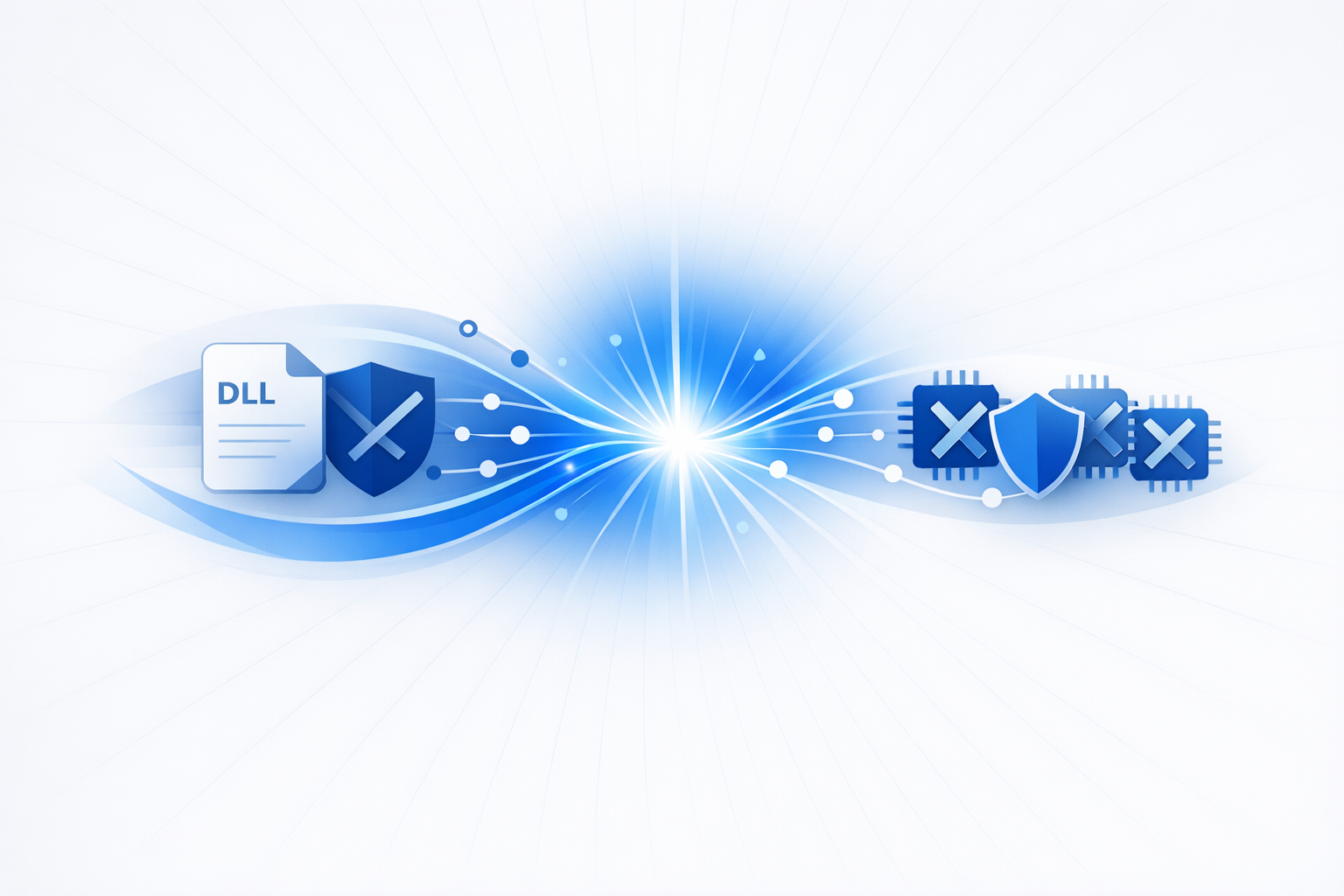
Qilin Ransomware Uses DLL Sideloading to Disable 300+ EDR Drivers
Cisco Talos reported that the **Qilin** ransomware operation is using a multi-stage infection chain built around a malicious side-loaded `msimg32.dll` to blind defenses before later-stage payloads run. The attack can begin when a legitimate application such as **FoxitPDFReader.exe** loads the rogue DLL, which forwards expected API calls to the real Windows library to avoid suspicion while decrypting and executing additional payloads entirely in memory. Researchers said the loader employs layered evasion, including **SEH/VEH-based control-flow obfuscation**, indirect syscall recovery similar to **Halo’s Gate**, **ETW suppression**, anti-debugging checks, and geofencing that avoids systems configured for post-Soviet locales. In the final stage, the malware deploys an **EDR killer** that can disable more than **300** endpoint security drivers by abusing two helper drivers, `rwdrv.sys` and `hlpdrv.sys`. Talos said the tooling uses physical memory access, kernel object manipulation, termination of protected EDR processes, and removal of kernel callbacks used for monitoring; it also temporarily interferes with **Code Integrity** checks before restoring the `CiValidateImageHeader` callback. The campaign shows Qilin—also tracked as **Agenda**, **Gold Feather**, and **Water Galura**—continuing to target the defense stack itself early in execution, giving ransomware operators a better chance of deploying encryption and follow-on payloads without detection.
Yesterday

European Commission Probes Breach of Amazon Cloud Environment
The European Commission is investigating a breach after a threat actor gained unauthorized access to its Amazon cloud infrastructure and at least one account used to manage that environment. According to reports, the intrusion was detected quickly by the Commission’s cybersecurity incident response team, but the actor claims to have exfiltrated more than **350 GB** of data, including multiple databases. Screenshots shared with reporters allegedly show access to European Commission employee information and an email server used by staff. The actor reportedly said they do not intend to extort the Commission and instead plan to leak the stolen data later. The incident adds to a recent string of security problems at European institutions: the Commission had already disclosed a separate breach tied to a compromised mobile device management platform, apparently linked to exploitation of **Ivanti Endpoint Manager Mobile** code-injection vulnerabilities that affected other organizations in the region as well.
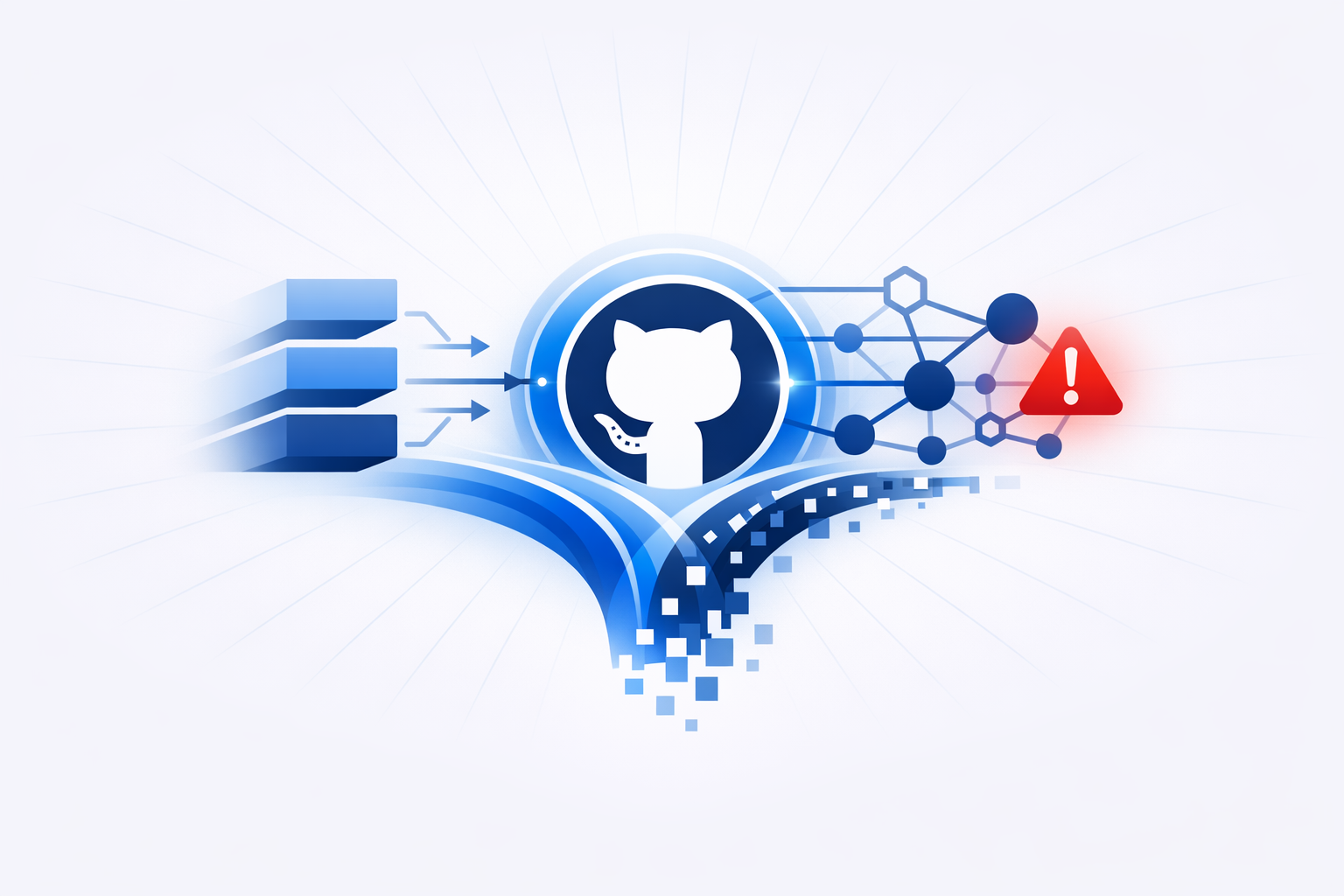
Misconfigured `pull_request_target` GitHub Actions enabled supply chain compromises
Researchers reported that insecure GitHub Actions workflows using the privileged `pull_request_target` trigger exposed major open source repositories to secret theft and supply chain abuse. Sysdig found workflows in projects including **MITRE** `mitre-attack/car`, **Splunk** `security_content`, and **spotipy** that checked out and executed untrusted forked pull request code in privileged CI contexts, enabling exfiltration of secrets and abuse of high-permission `GITHUB_TOKEN` access. Spotipy assigned **`CVE-2025-47928`** and fixed the issue after disclosure, MITRE remediated its workflow, and Splunk patched its pipeline. Wiz later described a large-scale campaign dubbed **prt-scan** that weaponized the same weakness across GitHub, sending more than 500 malicious pull requests in multiple waves and using increasingly tailored, AI-assisted payloads against Python, Node.js, Go, Rust, and GitHub Actions projects. Most attempts were blocked by contributor approval gates and workflow restrictions, but Wiz confirmed compromise of at least two npm packages—**`@codfish/eslint-config`** and **`@codfish/actions`**—across 106 versions, along with theft of credentials including **AWS keys**, **Cloudflare API tokens**, and **Netlify auth tokens**. The incidents underscored that repositories running untrusted PR code under `pull_request_target` can turn CI/CD pipelines into a direct path for secret exposure and downstream package compromise.

Iran Internet Blackout Amid US-Israel Strikes and Internal Unrest
Iran experienced a near-total **internet blackout** affecting roughly **90 million** people, with monitoring indicating about a **99% drop in outbound traffic** and only limited, likely **whitelisted** connectivity remaining for government, military, and select elites. Reporting indicated the shutdown followed **US and Israeli strikes on February 28** that killed Iran’s Supreme Leader **Ali Khamenei**, and that the state continued to route domestic activity through its *National Information Network (NIN)*, keeping access to local services while cutting off most access to the global internet; common circumvention methods (e.g., VPNs/proxies) were described as largely ineffective during a full shutdown, with a small number of external links reportedly available via **Starlink** gateways. Separate open-source reporting using **Planet Labs PlanetScope** satellite imagery documented damage consistent with strikes on **Iranian police stations**, alongside broader attacks on military infrastructure and significant reported casualties. The combined picture is of escalating kinetic conflict and internal security pressure coinciding with severe communications restrictions that constrain independent reporting, disrupt civilian and business connectivity, and centralize information flow through state-controlled networks.

Backdoored LiteLLM PyPI Releases Stole Secrets and Planted Kubernetes-Aware Malware
Attackers published malicious `litellm` versions `1.82.7` and `1.82.8` to PyPI after compromising the project’s release pipeline, turning a widely used AI gateway library into a credential-stealing malware delivery vehicle. Multiple reports link the intrusion to the broader **TeamPCP** supply-chain campaign and assess that stolen credentials from the earlier Trivy compromise were likely used to obtain LiteLLM publishing access. The tainted releases were available for roughly two to three hours before PyPI quarantined or yanked them, but researchers warned the exposure could be widespread because LiteLLM is heavily deployed across cloud and AI environments and was observed in about **36% of cloud environments** in Wiz telemetry. The malware harvested environment variables, cloud credentials, SSH keys, `.env` files, CI/CD secrets, Kubernetes tokens, database settings, Docker and Git credentials, AI provider API keys, and cryptocurrency wallet data, then encrypted and exfiltrated the data to `models.litellm[.]cloud`. It also established persistence through a disguised `systemd` service such as `sysmon.service` and polled `checkmarx[.]zone` for follow-on payloads; in Kubernetes environments, it attempted lateral movement by creating privileged pods and seeking node-level persistence. Version `1.82.8` posed the highest risk because a malicious Python `.pth` file executed automatically whenever the Python interpreter started, even if LiteLLM was never imported. Defenders were urged to treat any installation of either version as a full compromise, isolate affected hosts and CI jobs, remove persistence, inspect clusters and build artifacts, block attacker infrastructure, and rotate all reachable credentials immediately.

Qilin Ransomware Claims Attack on Germany’s Die Linke Party
The **Qilin** ransomware group has claimed responsibility for a cyberattack on **Die Linke**, a German political party, and threatened to leak allegedly stolen data on its Tor-based extortion site. Die Linke disclosed the incident shortly after detecting the compromise, took parts of its IT infrastructure offline, notified staff, alerted German authorities, and filed a criminal complaint. The party said the attack appeared to target sensitive internal party information and personal data belonging to employees at party headquarters. Die Linke said its **membership database was not affected** and that no member data was stolen, although it warned that internal records and employee information may be at risk. Qilin later added the party to its leak site without publishing proof-of-theft samples. The group is described as a **Russian-speaking ransomware-as-a-service** operation known for **double-extortion** tactics, and Die Linke said the incident may not have been random, citing both financial and possible political motives as independent IT experts work to restore affected systems.

LinkedIn scanned browsers for 6,236 Chrome extensions with hidden fingerprinting script
LinkedIn was reported to be running a hidden JavaScript fingerprinting script on its website that checks visitors’ browsers for **6,236 Chrome extensions** and collects device characteristics including CPU core count, available memory, screen resolution, time zone, language settings, battery status, and storage capabilities. BleepingComputer said it independently verified the script’s presence and behavior, finding that it used randomized filenames and probed static resources associated with extension IDs to determine which add-ons were installed. LinkedIn confirmed that it scans for extensions, saying the practice is intended to detect tools that scrape member data without permission, violate its terms of service, or generate unusual data-fetching activity that could affect platform stability. Reports said the extension list includes competing sales-intelligence tools such as **Apollo, Lusha, and ZoomInfo**, alongside unrelated categories like grammar and tax software, and noted the scope of the scanning had expanded from roughly 2,000 extensions to more than 6,000; questions remain about how the collected data is stored, linked to user identities, or used for enforcement.

TrueConf Zero-Day Let Attackers Push Malicious Updates to Southeast Asian Governments
A zero-day flaw in the TrueConf Windows client, tracked as **`CVE-2026-3502`** and rated **CVSS 7.8**, was exploited in the wild to compromise government entities in Southeast Asia. Researchers said the vulnerability stemmed from missing integrity and authenticity checks in TrueConf’s update validation process, allowing anyone who controlled an on-premises TrueConf server to replace legitimate client updates with arbitrary executables delivered through the trusted update channel. In the campaign dubbed **TrueChaos**, attackers used a weaponized TrueConf update to install malware while still performing a legitimate software upgrade, then dropped files including **`poweriso.exe`** and a malicious **`7z-x64.dll`** for DLL sideloading. The intrusion reportedly involved persistence, privilege escalation, reconnaissance, hands-on-keyboard activity, and retrieval of additional payloads, with researchers assessing that the operation likely aimed to deploy the **Havoc** command-and-control framework and was linked with moderate confidence to a Chinese-nexus threat actor. TrueConf released a fix in Windows client version **8.5.3**.

Meta Halts Mercor Work After Breach Exposes Sensitive AI Training Data
Meta has indefinitely paused work with data contractor Mercor after a major breach at the startup raised concerns that proprietary human-generated training datasets used by leading AI companies may have been exposed. Mercor supplies training data to firms including **OpenAI** and **Anthropic**, and the incident has prompted other AI labs to reevaluate their ties to the company. Mercor confirmed the attack internally on March 31 and said it was linked to a broader incident affecting multiple organizations. The breach is considered especially sensitive because exposed datasets could reveal details about AI model training pipelines and other competitive information. OpenAI said it is investigating whether its proprietary training data was affected, while adding that no OpenAI user data was exposed. Reporting tied the intrusion to compromised versions of the `LiteLLM` AI API tool, with researchers attributing the activity to **TeamPCP** rather than a threat actor simply using the **Lapsus$** name; the disruption also reportedly affected contractor work on Meta-related projects, including **Chordus**.

Fake Claude Code GitHub Repos Spread Vidar Infostealer and GhostSocks
Threat actors used fake GitHub repositories themed around Anthropic's leaked **Claude Code** source to distribute malware to users searching for the exposed codebase. Researchers at Zscaler ThreatLabz said one repository, operated by user **`idbzoomh`**, promoted a supposed Claude Code leak with "unlocked enterprise features" and no restrictions, while search-engine optimization helped it rank for queries such as **"leaked Claude Code."** Victims who downloaded the offered archive received a Rust-based executable, **`ClaudeCode_x64.exe`**, instead of source code. The executable acted as a dropper for the **Vidar** information stealer and the **GhostSocks** proxy malware. The lure followed Anthropic's accidental exposure of a **59.8 MB** JavaScript source map in an npm package, which revealed roughly **513,000 lines** of unobfuscated TypeScript across **1,906 files** and exposed internal logic and security-related details. Zscaler also identified a second similar repository believed to be tied to the same actor, indicating an ongoing campaign that reportedly reached tens of thousands of users and mirrors recent malware delivery efforts built around fake developer-tool downloads.

AI Agent Prompt-Injection and Web-to-Agent Takeover Risks in Developer Tooling
Security research highlighted **web-to-agent takeover** and **prompt-injection** risks in modern AI developer tooling. Oasis Security reported a “complete vulnerability chain” in the open-source AI agent **OpenClaw** that allowed a malicious website a developer merely visited to silently seize control of the local agent—without plugins, browser extensions, or additional user interaction—leveraging the agent’s ability to execute system commands and manage workflows. The OpenClaw maintainers rated the issue **High** severity and issued a patch within 24 hours of disclosure. Separate research described **RoguePilot**, a scenario in which a *passive prompt injection* can abuse highly privileged AI assistance inside **GitHub Codespaces**. The write-up emphasizes that Codespaces environments commonly expose a repository-scoped `GITHUB_TOKEN` with write permissions and provide AI “tools” such as terminal execution and file operations (e.g., `run_in_terminal`, `file_read`, `create_file`), creating “God Mode” conditions where untrusted text can be interpreted as instructions and lead to repository compromise. A third item (a *Smashing Security* podcast episode) primarily covers unrelated stories (alleged CAPTCHA-based DDoS activity tied to an archiving service and other news) and does not materially contribute to the AI agent takeover/prompt-injection topic.

Cyberattack Disrupts Massachusetts Regional Emergency Dispatch and Town Phone Systems
A cyberattack hit the Patriot Regional Emergency Communications Center in Pepperell, Massachusetts, disrupting computer systems used by town and public safety agencies across several northern Massachusetts communities. Officials said the incident affected police and fire operations in Ashby, Dunstable, Pepperell, Townsend, and other towns served by the regional dispatch hub, while non-emergency and business phone lines were knocked offline. Emergency `9-1-1` services remained operational despite the outage. Municipal officials said they brought in insurance representatives and outside cybersecurity responders and notified federal law enforcement as the investigation began. Authorities are still determining whether any data was accessed or stolen, and no threat actor had publicly claimed responsibility at the time of reporting. The affected center also supports emergency call intake and dispatch and is connected to the CodeRED notification platform, underscoring the continued exposure of municipal and emergency communications systems to disruptive cyber incidents.

EvilTokens Turns Microsoft Device Code Phishing Into a Scalable Account Takeover Service
Researchers identified **EvilTokens** as a new phishing-as-a-service platform built to hijack **Microsoft 365** accounts by abusing Microsoft’s legitimate OAuth 2.0 **device code** authentication flow. Sold and operated through Telegram bots, the service gives affiliates phishing templates, email harvesting and reconnaissance features, automated Microsoft API interactions, webmail access, and mailbox triage capabilities. Victims are lured into entering attacker-supplied device codes on Microsoft’s real login page, allowing attackers to capture access and refresh tokens—and in some cases a **Primary Refresh Token**—without stealing passwords or directly defeating MFA. Security teams linked a sharp rise in device code phishing to EvilTokens, describing it as the first known turnkey PhaaS offering dedicated Microsoft device code phishing pages and warning that it lowers the barrier for low-skill operators. More than **1,000 phishing domains** were observed by late March, with campaigns affecting organizations worldwide and notable activity in the United States, Australia, Canada, France, India, Switzerland, and the United Arab Emirates; finance, HR, and transportation/logistics staff were highlighted as frequent targets. Researchers from Sekoia and Mnemonic urged defenders to disable or restrict unnecessary device code flows in **Microsoft Entra ID**, monitor device code grant sign-ins for anomalies, train users on device authentication abuse, and revoke refresh tokens when compromise is suspected.

Unquoted Service Path Flaws in IObit Tools Enable Local SYSTEM Privilege Escalation
Newly published CVEs detail **unquoted service path** vulnerabilities in two IObit products that can let a low-privileged local attacker gain **`LocalSystem`** execution. **CVE-2016-20055** affects **IObit Advanced SystemCare 10.0.2**, specifically the `AdvancedSystemCareService10` service, while **CVE-2016-20059** affects **IObit Malware Fighter 4.3.1** through the `IMFservice` and `LiveUpdateSvc` services. Both issues are classified as **CWE-428** and carry high-severity CVSS v3.1 and v4.0 ratings reflecting potential impact to confidentiality, integrity, and availability. In both cases, an attacker with local access can place a malicious executable in a vulnerable service path and wait for the affected service to restart or for the system to reboot, at which point the payload may run with elevated privileges. The Malware Fighter entry cites supporting references including IObit product pages, an **Exploit-DB** listing, and a **VulnCheck** advisory, while both CVEs were recorded through disclosures submitted to **disclosure@vulncheck.com**.

Drone Strikes Damage AWS Data Centers in UAE and Bahrain, Causing Regional Outage
Amazon confirmed that **drone strikes** physically damaged AWS facilities in the **Middle East (UAE) Region `me-central-1`** and the **Middle East (Bahrain) Region `me-south-1`**, triggering a prolonged outage affecting dozens of cloud services. AWS reported structural damage, disrupted power delivery, and in some cases fire-suppression activity that caused additional water damage; multiple Availability Zones remained impaired, including **`mec1-az2` and `mec1-az3`** in the UAE and a continuing localized power issue impacting **`mes1-az2`** in Bahrain. Amazon said it is restoring physical infrastructure while also pursuing software-based recovery paths and prioritizing tools that enable customers to back up and migrate workloads out of the impacted regions. Incident reporting on the outage described an “unusual physical incident” in `me-central-1` where external objects struck a data center, causing sparks and a fire that led authorities to require a full power shutdown (including backup generators), taking down **EC2 instances**, **EBS volumes**, and **RDS databases** in the affected zone. Customers also experienced significant impairment of **EC2 networking APIs** (including `AllocateAddress`, `AssociateAddress`, `DescribeRouteTable`, and `DescribeNetworkInterfaces`), with AWS using traffic-weighting and configuration changes to shift load and restore functionality, though some API recovery lagged and constrained actions like reassigning Elastic IPs. AWS advised impacted customers to back up data and migrate workloads to unaffected regions while recovery continued.

Unquoted Service Path Flaws Expose Spy Emergency and sheed AntiVirus to SYSTEM Escalation
Newly documented vulnerabilities in **Spy Emergency build 23.0.205** and **sheed AntiVirus 2.3** allow local attackers to escalate privileges to **`LocalSystem`** through **unquoted service path** flaws classified as **`CWE-428`**. The affected services are **`SpyEmrgHealth`** and **`SpyEmrgSrv`** in Spy Emergency, and **`ShavProt`** in sheed AntiVirus. In each case, a low-privileged user can place a malicious executable in a path segment that Windows may incorrectly parse because the service executable path is not enclosed in quotes. If the vulnerable service is restarted or the host is rebooted, Windows can execute the attacker-controlled binary with **SYSTEM-level** privileges, creating a high-impact local privilege escalation path affecting confidentiality, integrity, and availability. The issues are tracked as **`CVE-2016-20056`** for Spy Emergency and **`CVE-2016-20061`** for sheed AntiVirus, with both records referencing vendor resources, **Exploit-DB**, and **VulnCheck** advisories.