
Self-Propagating SORVEPOTEL Malware Spreads via WhatsApp Targeting Brazilian Windows Users
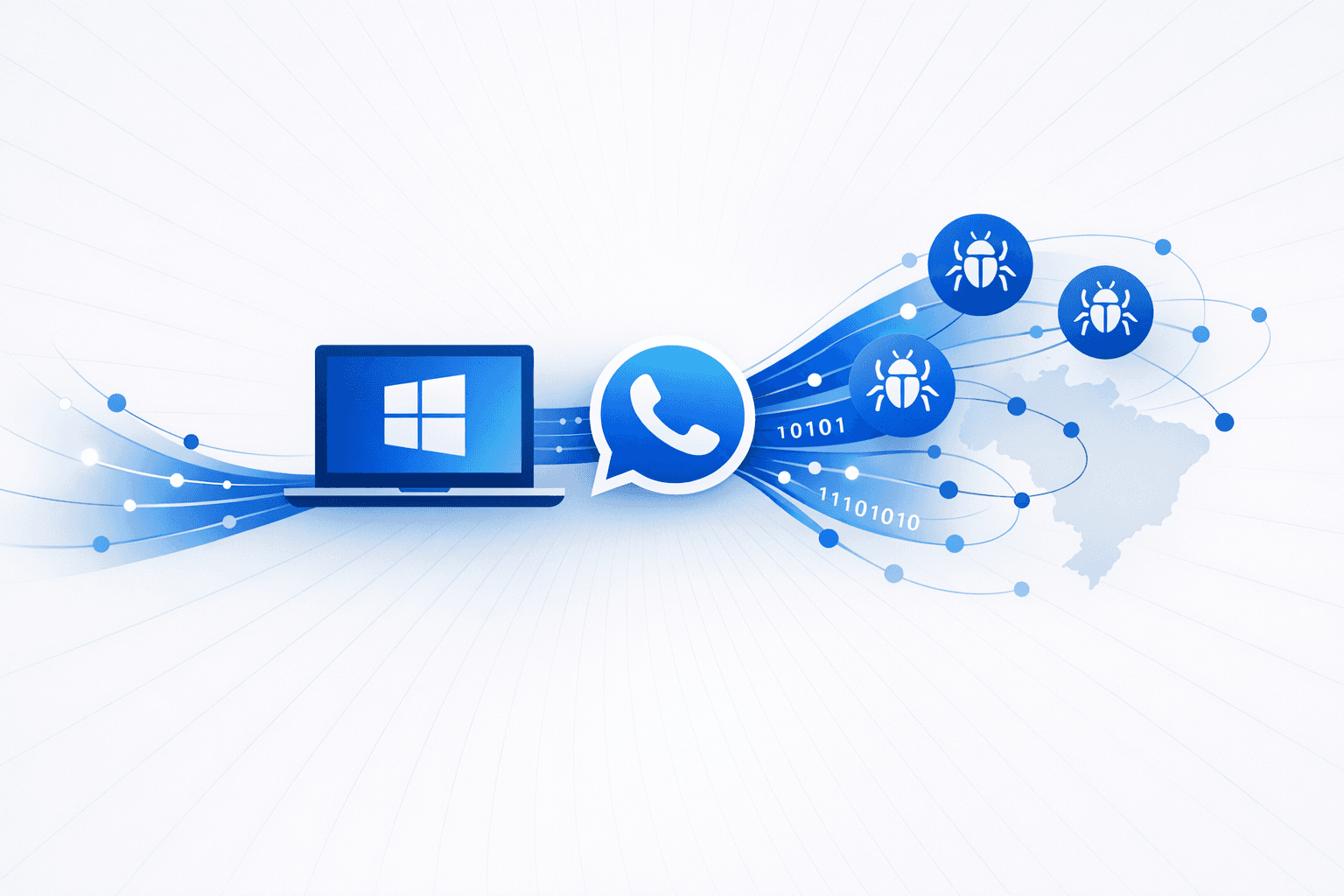
A new malware campaign, identified as SORVEPOTEL, has been actively targeting Windows users in Brazil by exploiting the WhatsApp messaging platform as its primary infection vector. The campaign is engineered for rapid propagation rather than data theft or ransomware, focusing on widespread distribution through social engineering tactics. Attackers initiate the infection by sending convincing phishing messages from already compromised WhatsApp accounts, which increases the credibility of the malicious communication. These messages contain ZIP file attachments that masquerade as legitimate documents, such as receipts or health app files, and are specifically crafted to require opening on a desktop, indicating a focus on enterprise environments. Upon opening the ZIP file, victims are prompted to execute a Windows shortcut (LNK) file, which silently triggers the malware installation on the system. Once installed, SORVEPOTEL leverages active WhatsApp Web sessions to automatically send the same malicious ZIP file to all contacts and groups associated with the victim’s account, enabling rapid self-propagation. This automated spamming behavior often results in the infected WhatsApp accounts being banned due to excessive activity. Trend Micro telemetry indicates that out of 477 detected cases, 457 occurred in Brazil, highlighting a strong regional focus. The campaign has notably impacted government and public service organizations, but has also affected entities in manufacturing, technology, education, and construction sectors. While the primary goal appears to be mass distribution, there is concern that similar techniques have previously been used in Brazil to target financial data, raising the risk of future campaigns with more damaging objectives. Researchers have also observed that, in addition to WhatsApp, the attackers may use email as a secondary distribution channel, sending the same malicious ZIP files from seemingly legitimate email addresses. The use of social trust and automation in this campaign demonstrates a sophisticated approach to maximizing infection rates. There is currently no evidence that SORVEPOTEL exfiltrates data or encrypts files, but the potential for further exploitation remains. The campaign underscores the importance of user awareness regarding phishing tactics, especially those leveraging trusted communication platforms. Security teams are advised to monitor for suspicious WhatsApp Web activity and educate users about the risks of opening unsolicited attachments. The incident highlights the evolving threat landscape where messaging platforms are increasingly abused for malware propagation, particularly in regions with high platform adoption.
Timeline
Oct 6, 2025
Trend Micro publishes defensive guidance for WhatsApp-based malware spread
Trend Micro advised organizations to disable WhatsApp auto-downloads, restrict file transfers through personal apps on managed devices, apply BYOD controls, and improve user awareness training against unexpected attachments. The company said it was continuing to monitor the campaign and recommended keeping defenses updated against messaging-platform attacks.
Oct 6, 2025
Additional analysis reveals banking and credential-theft capabilities
Follow-on reporting described Sorvepotel as capable of injecting shellcode into powershell_ise.exe, monitoring banking-related activity, and stealing browser credentials. The malware was also reported to conditionally act when victims visited targeted Brazilian financial institutions and cryptocurrency exchanges.
Oct 3, 2025
Trend Micro links campaign to Brazilian organizations across multiple sectors
Researchers reported that most observed infections were in Brazil and affected organizations in government, public services, manufacturing, technology, education, and construction. The campaign appeared aimed at enterprise users because it abused active WhatsApp Desktop/Web sessions to message all contacts and groups.
Oct 3, 2025
Researchers identify Sorvepotel infection chain and persistence methods
Trend Micro disclosed that the campaign delivers a ZIP archive containing a malicious LNK file that launches PowerShell to download additional payloads from attacker-controlled infrastructure such as typosquatted domains. The malware establishes persistence through the Windows Startup folder and communicates with command-and-control infrastructure.
Oct 3, 2025
Water Saci campaign begins using WhatsApp to spread malware in Brazil
A self-propagating malware campaign dubbed Water Saci began targeting Brazilian users by sending malicious ZIP attachments through compromised WhatsApp accounts and, in some cases, email. The operation focused on rapid spread across Windows systems, especially via WhatsApp Web/Desktop sessions.
See the full picture in Mallory
Mallory subscribers get deeper analysis on every story, including:
Who’s affected and how
Deep-dive technical analysis
Actionable next steps for your team
IPs, domains, hashes, and more
Ask questions and take action on every story
Filter by topic, classification, timeframe
Get matching stories delivered automatically
Related Entities
Organizations
Sources
Related Stories
Eternidade Stealer Banking Trojan Propagated via WhatsApp Worm in Brazil
Cybersecurity researchers have identified a new campaign targeting Brazilian users in which the Eternidade Stealer, a Delphi-based banking trojan, is distributed through a WhatsApp worm. The attack leverages social engineering and WhatsApp hijacking, with the threat actor deploying a Python script—marking a shift from previous PowerShell-based methods—to hijack WhatsApp Web sessions and spread malicious attachments. The campaign uses an obfuscated Visual Basic Script as the initial infection vector, which then drops a batch script responsible for delivering two payloads, including the Python-based worm. The malware utilizes the Internet Message Access Protocol (IMAP) to dynamically retrieve command-and-control (C2) addresses, allowing the attacker to update C2 infrastructure as needed. This activity is part of a broader trend in Brazil, where WhatsApp's ubiquity makes it a favored vector for distributing banking trojans and information stealers. The use of Delphi for malware development remains prevalent in Latin America due to its technical efficiency and regional familiarity. Researchers note that this campaign represents an evolution in tactics, building on previous attacks such as Water Saci, and highlights the increasing sophistication of social engineering and malware propagation techniques in the region's cybercrime ecosystem.
1 months ago
AI-Enhanced Python Malware Targets Brazilian Financial Institutions via WhatsApp
A threat campaign known as Water Saci has escalated its attacks on Brazilian financial institutions and cryptocurrency exchanges by deploying a new Python-based malware variant. This campaign leverages artificial intelligence (AI) to convert previous PowerShell propagation scripts into Python, resulting in broader browser compatibility, improved error handling, and faster automation of malware delivery through WhatsApp Web. The attackers use a highly layered attack chain involving multiple file formats such as HTA files, ZIP archives, and PDFs to evade detection and complicate analysis, with the ultimate goal of stealing sensitive data and monitoring user activity on compromised machines. The campaign primarily targets enterprise users of WhatsApp in Brazil, exploiting social engineering tactics to deliver malicious payloads through convincing messages from trusted contacts. Researchers warn that the use of AI-driven code conversion and multi-format delivery methods marks a significant evolution in the threat landscape, making these attacks more sophisticated and harder to detect. While the campaign is currently concentrated in Brazil, there is concern it could expand to other Latin American countries as the techniques continue to evolve.
1 months ago
Maverick Banking Trojan Spreads via WhatsApp and Steals Financial Credentials
A new banking Trojan named Maverick has been identified targeting users in Brazil through a sophisticated, fileless malware campaign. The infection chain begins with the distribution of malicious ZIP files containing LNK shortcuts, which are sent via WhatsApp messages. These LNK files are not blocked by WhatsApp, allowing the malware to propagate widely among Brazilian users. Once a device is infected, the Maverick Trojan leverages the open-source WPPConnect project to automate the sending of further malicious messages from the victim’s WhatsApp Web account, effectively turning compromised devices into worms that spread the malware to additional contacts. The Trojan is highly targeted, checking the infected system’s time zone, language, and regional settings to ensure it only installs on Brazilian machines. Upon successful infection, Maverick operates entirely in memory, minimizing disk activity and making detection more difficult. The malware is modular, using PowerShell and .NET components to execute its payloads. Its primary objective is to steal banking and UPI credentials by monitoring browser activity, taking screenshots, logging keystrokes, and overlaying phishing pages when users access banking websites. Maverick can also control the mouse, block the screen during sensitive operations, and terminate processes to evade detection. The campaign specifically targets 26 Brazilian banks, 6 cryptocurrency exchanges, and a major payment platform, indicating a broad financial focus. The command-and-control infrastructure is designed to verify that downloads originate from the malware itself, adding another layer of evasion. Researchers have noted significant code overlap between Maverick and the previously known Coyote Trojan, but Maverick is considered a distinct and new threat. The use of WhatsApp as a distribution vector is particularly concerning, as it exploits the trust between contacts and the widespread use of the messaging platform in Brazil. The fileless nature of the attack chain, combined with the use of legitimate open-source tools, complicates detection and remediation efforts. Security experts recommend heightened vigilance for suspicious WhatsApp messages containing attachments, especially those in Portuguese or referencing financial matters. Organizations and individuals are urged to update their security solutions and educate users about the risks of opening unsolicited files, even from known contacts. The emergence of Maverick underscores the evolving tactics of cybercriminals targeting the Brazilian financial sector and highlights the need for robust, multi-layered defenses.
1 months ago