
US Eases Restrictions on NVIDIA H200 AI GPU Exports to China

The U.S. government has decided to allow NVIDIA to export its H200 AI GPUs to China under strict conditions, marking a significant shift in export control policy. The H200, while not NVIDIA's most advanced processor, offers substantial performance improvements over previous models and is highly sought after for training large AI models. The decision reportedly comes with a 25% fee and is intended to balance U.S. national security concerns with commercial interests, as previous restrictions did not significantly impede the progress of leading Chinese AI companies.
Despite the easing of restrictions, it remains uncertain whether Chinese companies will import the H200, as China has previously blocked less capable models and is increasingly focused on developing domestic AI hardware solutions. While competitors like Huawei are advancing their own accelerators, many Chinese firms continue to rely on NVIDIA's hardware due to the dominance of its CUDA software stack. The move reflects ongoing debates within the U.S. government about the effectiveness of export controls and the global competition in AI technology.
Timeline
Dec 9, 2025
Report says U.S. approves H200 exports to China with a 25% fee
A December 9 report said the Trump administration had allowed Nvidia to export H200 technology to China under a strict 25% fee, framing the move as a compromise amid ongoing U.S.-China technology tensions.
Dec 8, 2025
U.S. Commerce Department reportedly prepares to allow H200 exports to China
Reporting on December 8 said the U.S. Department of Commerce was preparing to let Nvidia export its more powerful H200 AI GPU to China, signaling a more flexible application of existing export rules without formally changing them.
Dec 8, 2025
China reportedly rejects Nvidia's H20 for political reasons
According to the reporting, China previously declined the H20 despite its export approval, reflecting political considerations and support for domestic suppliers such as Huawei.
Dec 8, 2025
Nvidia H20 becomes the previously export-approved China offering
After the 2023 controls, Nvidia's H20 was the Hopper-based AI GPU variant allowed for export to China, serving as the benchmark for later discussions about permitting the more capable H200.
Jan 1, 2023
U.S. imposes 2023 export controls on advanced AI GPUs to China
The United States put export control rules in place in 2023 restricting sales of advanced AI accelerators to China, establishing the policy framework that later governed Nvidia's Hopper-class products.
See the full picture in Mallory
Mallory subscribers get deeper analysis on every story, including:
Who’s affected and how
Deep-dive technical analysis
Actionable next steps for your team
IPs, domains, hashes, and more
Ask questions and take action on every story
Filter by topic, classification, timeframe
Get matching stories delivered automatically
Sources
Related Stories
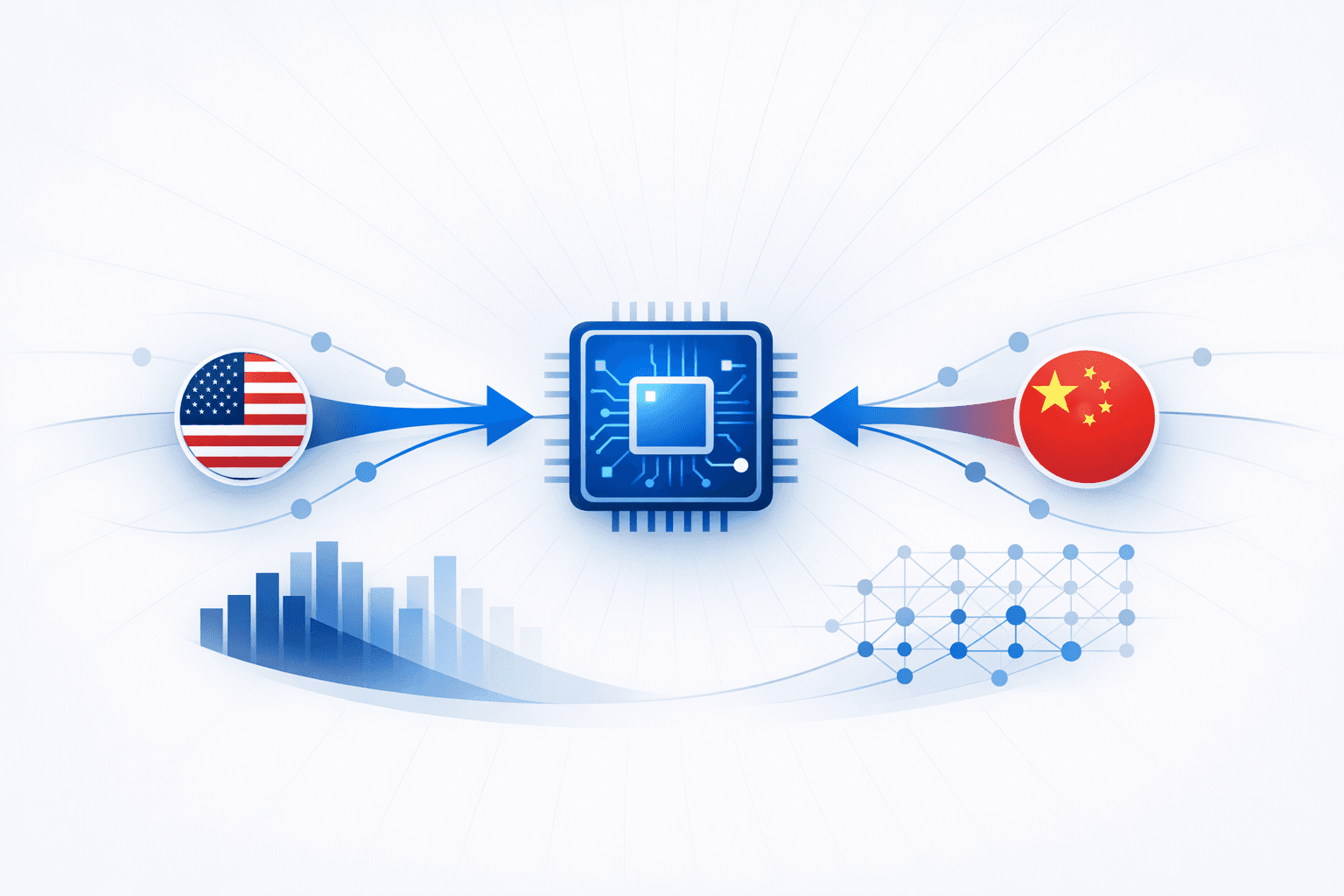
US Approval of Nvidia H200 AI Chip Exports to China Under Strict Controls
The United States government has authorized Nvidia to export its H200 AI accelerator chips to select Chinese customers, reversing previous restrictions that had barred such sales. The decision, announced by President Donald Trump, requires each chip to be routed through US territory for inspection and imposes a 25% import duty. The move is intended to maintain US technological superiority while allowing controlled access to advanced AI hardware, as the H200 is significantly more powerful than the previously permitted H20 model but still less advanced than Nvidia's latest Blackwell chips, which remain restricted. The policy shift follows concerns that strict export bans were accelerating the development of domestic Chinese alternatives, particularly from companies like Huawei, whose Ascend 910C and CloudMatrix 384 chips are approaching parity with Nvidia's offerings. Chinese regulators have responded by convening emergency meetings with major technology firms such as Alibaba, ByteDance, and Tencent to assess demand for the H200 and consider potential import limits. The Chinese government is weighing whether to permit purchases and how to structure access, with discussions reportedly focusing on restricting public sector use and requiring justification for why domestic chips cannot meet company needs. The US administration's strategy aims to keep Chinese industry reliant on American technology and secure revenue for Nvidia, which has seen its China market share plummet due to earlier restrictions. The decision is seen as a calculated effort to balance national security concerns with economic interests and the ongoing competition in AI hardware development between the US and China.
1 months ago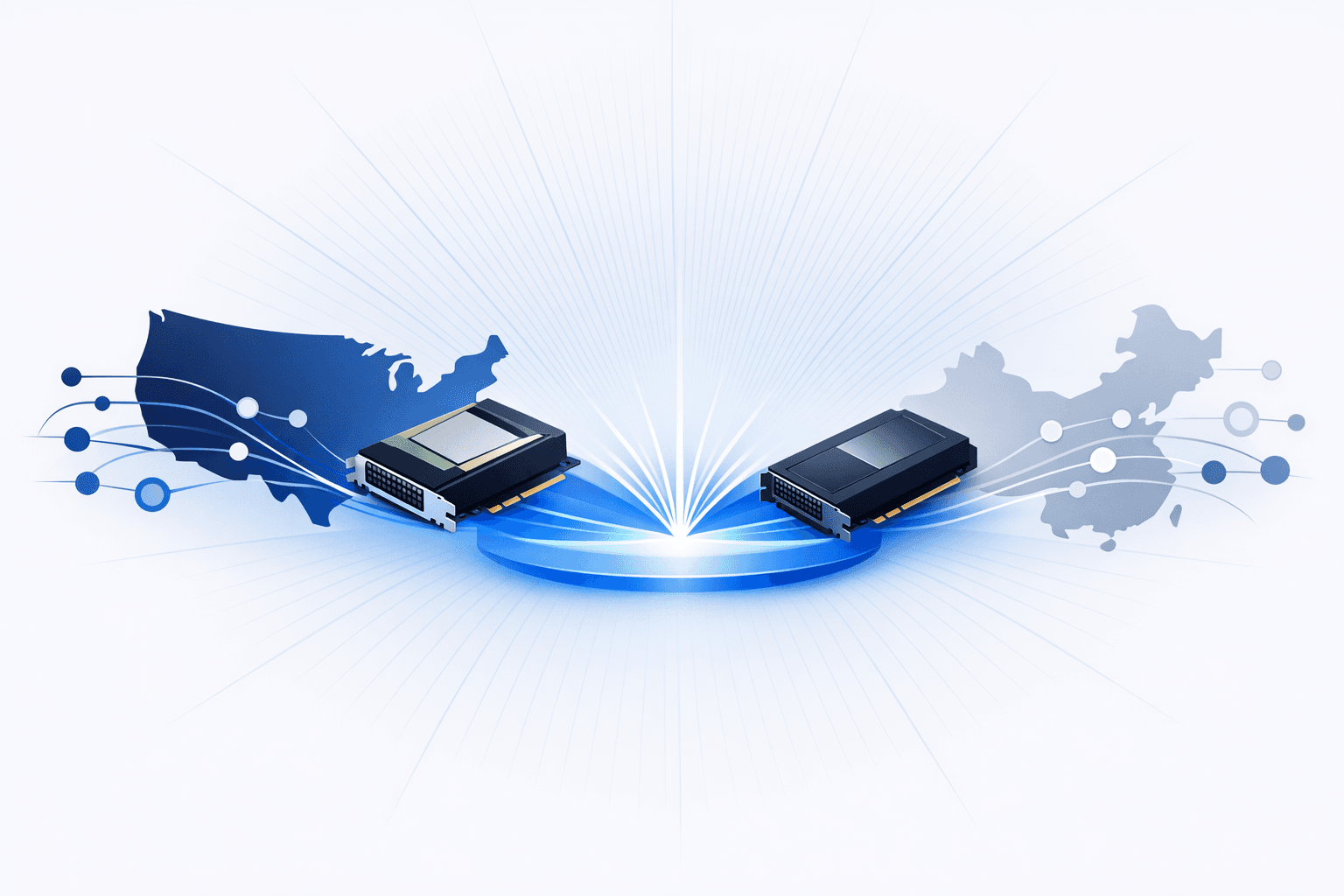
U.S. Revises Export Controls to Allow Limited Sales of Nvidia H200 and AMD MI325X AI GPUs to China
The U.S. Department of Commerce’s Bureau of Industry and Security (BIS) announced revised export rules that can allow **limited, licensed exports** of certain advanced U.S.-designed AI/HPC accelerators—explicitly including **Nvidia’s H200** and **AMD’s Instinct MI325X**—to China and Macau. The policy shifts from purely performance-threshold gating toward a licensing framework that emphasizes **U.S. supply priority** and compliance assurances, including requirements that exporters demonstrate U.S. demand is met, U.S. orders are not delayed, and that PRC-bound shipments are capped relative to U.S. volumes (e.g., aggregate shipments to China not exceeding **50%** of the same product shipped into the U.S.). BIS also cited conditions such as Chinese purchasers adopting export-compliance procedures (including customer screening) and **independent third-party testing in the U.S.** to verify product performance and security. The change triggered political scrutiny in Congress, with House lawmakers warning that expanded Chinese access to advanced U.S. chips could accelerate Beijing’s AI and military ambitions, even as the administration framed the move as controlled via licensing and review. Separately, reporting indicated Beijing may be **constraining domestic purchases** of H200s to “special circumstances,” potentially limiting access largely to **university R&D labs**, reflecting China’s tension between acquiring leading-edge foreign accelerators and supporting domestic semiconductor development. Commentary from Nvidia CEO Jensen Huang about “god AI” and AI “doomer” narratives was unrelated to the export-control policy and did not add security-relevant detail to the export-rule story.
1 months ago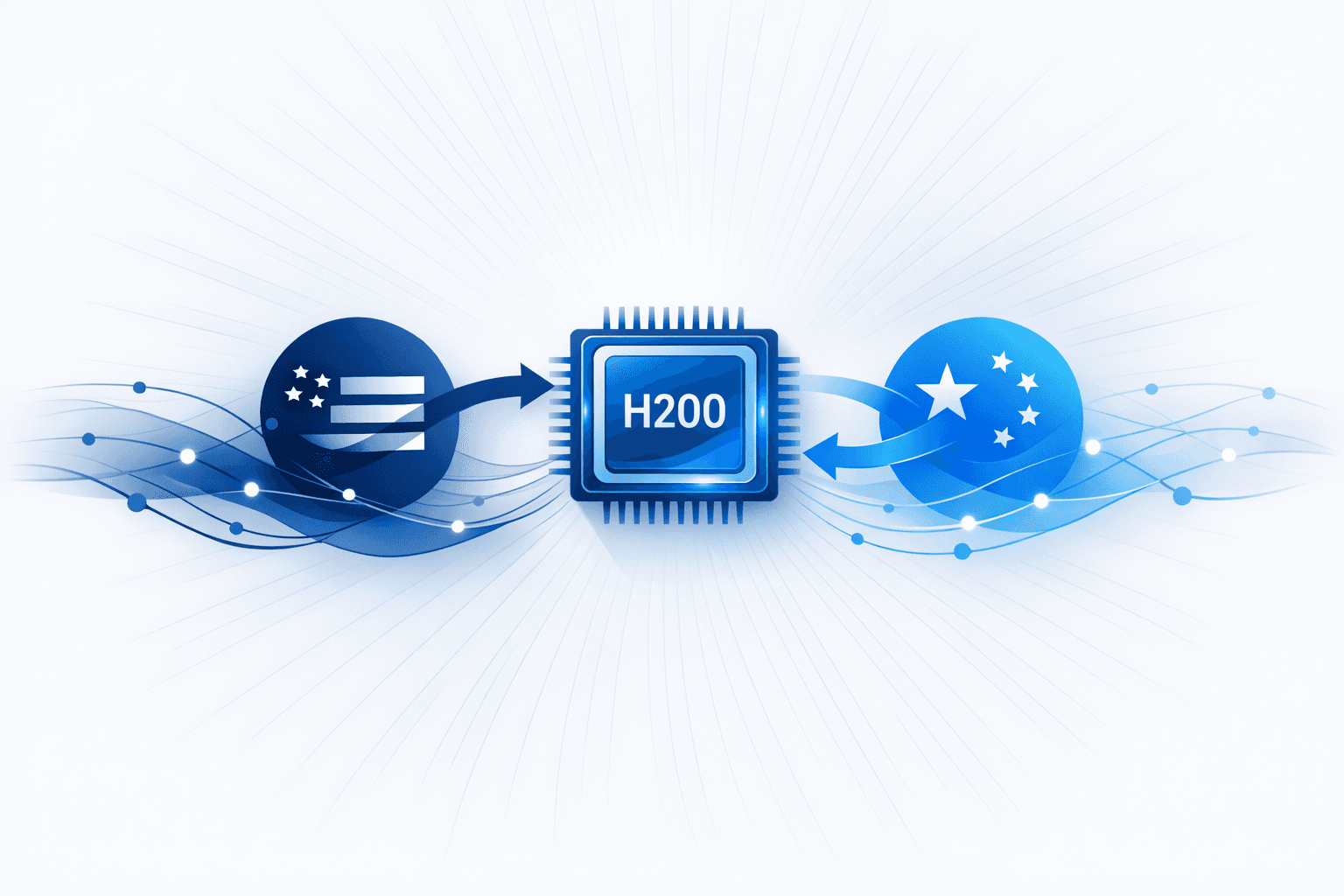
Nvidia Restarts H200 AI GPU Supply to China Under U.S. Export Licenses
**Nvidia** has resumed movement of its China AI chip supply chain after receiving U.S. export licenses for multiple Chinese customers and restarting **H200** manufacturing, according to CEO Jensen Huang. The restart follows a prolonged freeze caused by U.S. export controls designed to limit China’s access to advanced accelerators for military and strategic AI use. The new arrangement reportedly allows approved Chinese buyers to obtain H200 GPUs under federal authorization, with earlier reporting indicating a revenue-sharing surcharge tied to those sales. Demand from Chinese hyperscalers remains strong because the H200 is substantially more capable than the downgraded **H20** product Nvidia had previously positioned for the market. The policy shift is also affecting the broader semiconductor supply chain, especially **South Korean memory suppliers** tied to Nvidia’s AI products. Tight U.S. controls on high-end GPUs and even some mid-tier chips have increased uncertainty for companies such as **SK Hynix** and **Samsung Electronics**, whose high-bandwidth memory business is closely linked to Nvidia shipment volumes. At the same time, restrictions intended to slow Beijing’s AI progress are encouraging Chinese substitution efforts, with domestic alternatives such as **Huawei Ascend 910B** gaining traction as buyers seek to reduce dependence on U.S. technology.
1 months ago