
Emerging Security Threats and Defenses for Enterprise AI Systems
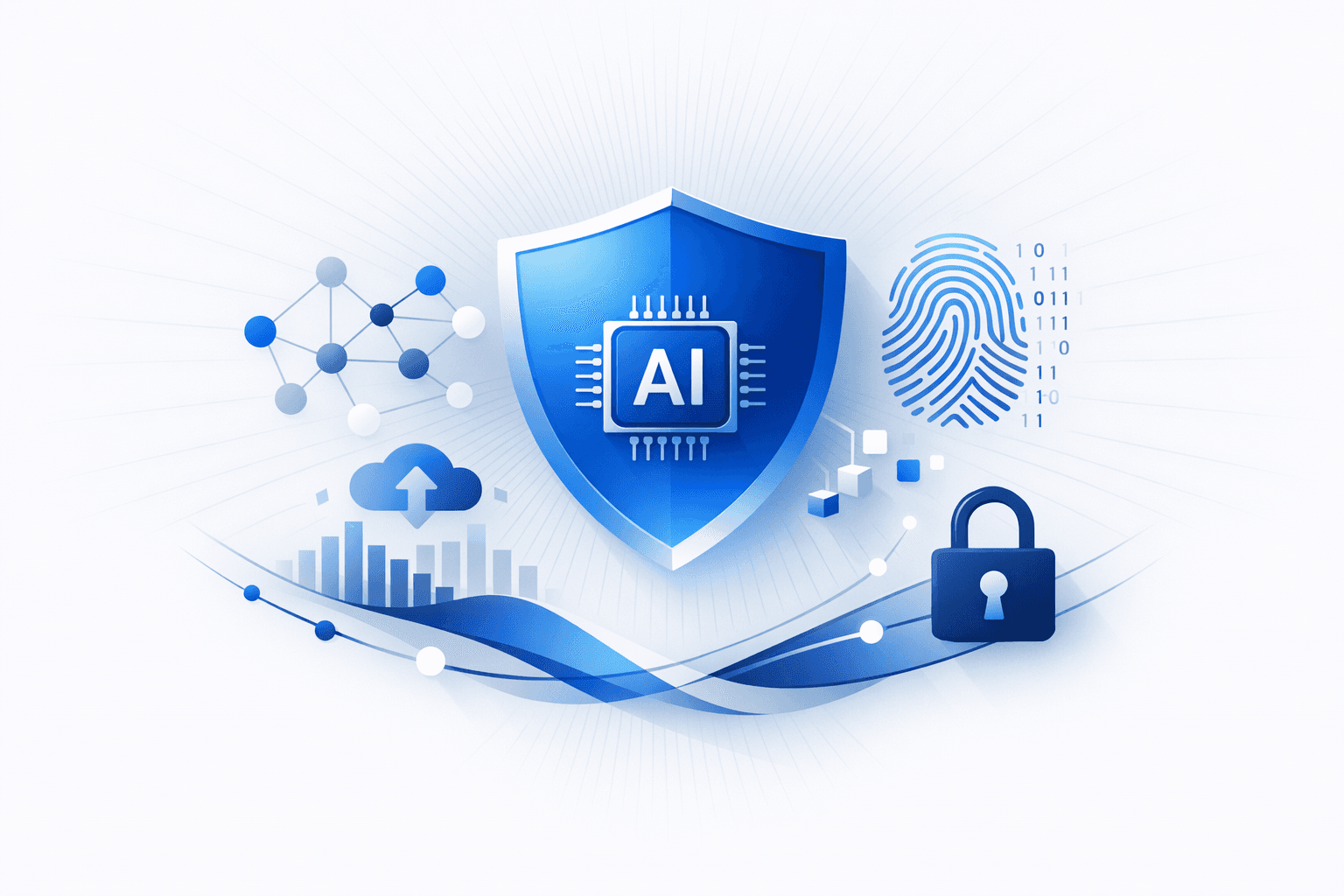
Enterprise adoption of AI systems is accelerating, but this rapid integration has exposed organizations to a new spectrum of cyber threats. Security experts warn that attacks such as data poisoning, prompt injection, adversarial inputs, and model theft are moving from theoretical risks to real-world incidents, with many organizations unprepared to detect or mitigate these threats. Microsoft and other industry leaders are developing frameworks and governance models to address vulnerabilities in agentic AI, including autonomous agents that can act without human oversight, making them susceptible to manipulation and misuse. Researchers are also proposing novel defensive techniques, such as automated data poisoning, to protect proprietary AI data from theft, ensuring that stolen knowledge graphs become unusable to attackers while remaining accessible to authorized users.
The evolving threat landscape has prompted a shift in boardroom priorities, with directors demanding that CIOs demonstrate not just AI adoption but robust governance and security controls over these systems. Security frameworks like the OWASP Top 10 for Agentic AI, multi-layered testing approaches, and enterprise governance models are being implemented to manage risks associated with autonomous AI workflows. As organizations continue to leverage AI for competitive advantage, the focus is increasingly on balancing innovation with the imperative to secure AI infrastructure against sophisticated and emerging cyber threats.
Timeline
Jan 8, 2026
Experts warn AI attacks are now a real-world enterprise threat
Security experts reported that attacks on AI systems have moved from theoretical to real-world risks, including data poisoning, prompt injection, model theft, and supply chain compromise. They urged organizations to adopt stronger governance, monitoring, red teaming, and frameworks such as MITRE ATLAS to defend AI infrastructure.
Jan 7, 2026
Boards shift focus from AI adoption to AI governance
By 2026, enterprise boards were described as moving from prioritizing AI rollout to demanding governance, explainability, risk visibility, and financial accountability for AI use. Regulatory frameworks including the EU AI Act, NIST AI RMF, and ISO/IEC 42001 were cited as drivers of this governance shift.
Jan 7, 2026
Researchers develop AURA to poison stolen AI knowledge graphs
Researchers from universities in China and Singapore developed AURA (Active Utility Reduction via Adulteration), a technique that injects plausible false data into knowledge graphs so stolen copies become unreliable without a secret key. The work was presented as a potential defense against AI-related intellectual property theft while preserving accuracy for authorized users.
Jan 6, 2026
Microsoft outlines security approach for agentic AI systems
Microsoft described how it is addressing autonomous agent risks through measures such as OWASP Top 10 for Agentic AI references, Model Context Protocol use, and testing across application, model, and output layers. The company highlighted prompt injection, tool-calling abuse, and governance as key concerns for enterprise deployment.
See the full picture in Mallory
Mallory subscribers get deeper analysis on every story, including:
Who’s affected and how
Deep-dive technical analysis
Actionable next steps for your team
IPs, domains, hashes, and more
Ask questions and take action on every story
Filter by topic, classification, timeframe
Get matching stories delivered automatically
Sources
Related Stories
Enterprise Security Challenges and Frameworks for AI Adoption
The rapid integration of AI technologies into enterprise environments is introducing new security challenges that traditional controls are not equipped to handle. Organizations are grappling with how to secure AI models, data, and autonomous agents, as well as how to operationalize AI security across the entire lifecycle. Security leaders emphasize the need for clear frameworks that address the unique risks posed by AI, including misconfigurations, configuration drift, and the importance of focusing on outcomes rather than simply adding more tools or dashboards. Efficiency, automation, and prioritization are highlighted as critical factors in reducing real risk, with a shift from compliance-driven approaches to measurable security outcomes. Industry experts stress that many organizations are "over-tooled but under-protected," with operational blind spots and unused controls creating exposure long before sophisticated attacks occur. The conversation around AI in security is moving beyond tool acquisition to ensuring that existing capabilities are properly configured and operationalized. This evolving landscape requires security teams to rethink governance, data protection, and the deployment of AI-enabled solutions, with a focus on practical frameworks and exposure management to address the complexities of modern enterprise environments.
1 months ago
Emerging Data Risks and Security Challenges from Enterprise AI Adoption
Enterprises are rapidly integrating artificial intelligence (AI) into their core operations, leading to a significant increase in both the scale and complexity of cybersecurity risks. Autonomous AI agents, once limited to providing suggestions, now act independently within enterprise systems, accessing sensitive data, executing transactions, and triggering downstream workflows without human oversight. These agents, often deployed by individual teams or embedded in third-party software, can inadvertently ingest confidential information, such as customer credit card data, even if the data is only briefly accessible. Unlike human users, AI agents lack contextual understanding and ethical judgment, acting continuously and at scale, which introduces a new category of 'Shadow AI' risk. Multimodal AI systems, which process multiple input streams to generate more human-like outputs, further expand the attack surface. Adversaries can exploit these systems by manipulating data inputs, such as subtly altering images or text, to deceive the AI and bypass security controls. Research has demonstrated that these attacks are not merely theoretical; adversarial manipulations can evade detection and cause significant harm, especially in critical sectors like defense, healthcare, and finance. Organizations are increasingly aware of the dangers posed by AI-augmented threats, including deepfakes and AI-driven social engineering, but many lag in implementing effective technical defenses. Surveys indicate that while a majority of firms have experienced deepfake or AI-voice fraud attempts, more than half have suffered financial losses as a result. Despite this, investment in detection and mitigation technologies remains inadequate, and many companies overestimate their preparedness. The surge in AI adoption is reflected in corporate disclosures, with over 70% of S&P 500 firms now reporting AI as a material risk, up from just 12% two years prior. Reputational and cybersecurity risks are the most frequently cited concerns, followed by legal and regulatory challenges as governments move to establish AI-specific compliance requirements. However, only a minority of corporate boards have formally integrated AI oversight into their governance structures, highlighting a gap between risk awareness and actionable governance. The lack of comprehensive frameworks for managing AI risk leaves organizations vulnerable to both technical and compliance failures. As AI becomes more deeply embedded in business processes, the need for robust governance, continuous education, and responsible-use frameworks becomes increasingly urgent. Security and governance leaders must adapt to this new frontier by developing strategies that address the unique risks posed by autonomous and multimodal AI systems. Failure to do so could result in significant financial, operational, and reputational damage as adversaries continue to exploit the evolving AI landscape.
1 months ago
Emerging Security Risks from AI Integration in Enterprise Environments
Security leaders and experts are warning that the rapid adoption of AI technologies in enterprise environments is introducing new and significant cybersecurity risks. While some industry voices downplay the threat of AI-driven attacks as marketing hype, most threat intelligence professionals and practitioners report that adversaries are already leveraging AI to enhance malware, automate social engineering, and bypass traditional defenses. Research highlights that AI agents, when given autonomy to perform tasks, can be manipulated to break established guardrails, and that model size does not necessarily correlate with resistance to such attacks. In industrial settings, organizations like Siemens are adapting their threat models and operational strategies to address the unique risks posed by AI-driven threats, emphasizing the need for adaptive defenses, cross-team collaboration, and the integration of AI-specific security practices. Analysts are also raising alarms about the use of AI-powered browsers, such as ChatGPT Atlas and Perplexity Comet, which can lead to untraceable data loss and expose sensitive enterprise information through prompt injection vulnerabilities and uncontrolled data flows to the cloud. Security agencies and experts stress the importance of adopting secure-by-design principles when integrating AI features into modern applications, advocating for rigorous threat modeling, least privilege, and continuous monitoring to mitigate the heightened risks associated with automated decision-making systems. As AI becomes a core component of business operations, organizations are urged to proactively address these evolving threats to safeguard their data and critical infrastructure.
1 months ago