
US Intelligence and Homeland Security Oversight Scrutiny Over Surveillance, Biometrics, and Handling of Classified Intelligence

Senior US officials and lawmakers are escalating oversight and policy debates around surveillance authorities and intelligence handling. The White House confirmed it will convene a high-level meeting with senior national security leaders and key members of Congress to discuss reauthorizing FISA Section 702, which is set to lapse without congressional action; the authority enables warrantless targeting of foreigners’ communications but can incidentally collect Americans’ communications, fueling renewed civil-liberties and warrant-requirement disputes. Separately, Director of National Intelligence Tulsi Gabbard is facing scrutiny on multiple fronts, including a whistleblower complaint alleging unusual restrictions on dissemination of highly classified NSA-derived intelligence and claims she directed the NSA not to publish a report and instead route details to her office; Gabbard’s office denies wrongdoing and says her actions were lawful, while the underlying complaint remains highly classified.
Parallel oversight pressure is also building around domestic-facing security and data practices. The DHS Office of Inspector General launched an audit into how DHS components—initially focusing on ICE and the Office of Biometric Identity Management—collect, manage, share, and secure PII and biometric data used in immigration enforcement, following lawmakers’ concerns about facial recognition and license-plate data collection. In a separate but related governance controversy, Gabbard’s expanded involvement in election security—including participation around an FBI raid of a local elections office and actions involving voting systems that her team said had cybersecurity vulnerabilities—has raised questions about mandate boundaries between foreign-interference missions and domestic election administration. In contrast, the CIA’s announcement of a new acquisition framework to speed technology adoption is primarily an internal modernization/procurement change and does not materially advance the surveillance/oversight storyline beyond general national-security context.
Timeline
Feb 10, 2026
White House plans meeting on looming Section 702 lapse
The White House scheduled a meeting with senior administration officials and key lawmakers to discuss how to handle the expected April expiration of FISA Section 702 without congressional reauthorization. The FBI had privately warned congressional staff that it was concerned about the authority lapsing.
Feb 10, 2026
DHS inspector general launches audit of biometric data practices
The DHS Office of Inspector General began an audit of DHS privacy practices related to facial recognition and other biometric technologies. The review initially targets ICE and the Office of Biometric Identity Management and will assess how biometric and personally identifiable data is collected, shared, and secured.
Feb 9, 2026
ODNI rejects whistleblower allegations against Gabbard
Gabbard's office publicly denied wrongdoing, saying her handling of classified intelligence was lawful and within her statutory authority. The response came amid media scrutiny and debate over the credibility and legality of the whistleblower complaint.
Feb 9, 2026
ODNI role in election security expands amid raids and machine seizures
ODNI under Tulsi Gabbard took an unusually active role in election security matters, including Gabbard appearing during an FBI raid of a Fulton County, Georgia elections office and ODNI-confirmed seizures of voting machines in Puerto Rico over alleged cybersecurity vulnerabilities. Critics questioned whether ODNI was exceeding its foreign-interference mandate and amplifying election insecurity narratives.
Feb 2, 2026
Whistleblower complaint on Gabbard's handling of intelligence reaches Congress
After reportedly being stalled in Gabbard's office for about eight months, a highly classified whistleblower complaint was shared with Congress, with the Gang of Eight receiving a heavily redacted version. The complaint alleged Gabbard restricted distribution of intelligence for political purposes.
Apr 1, 2024
Biden signs two-year FISA Section 702 renewal
President Joe Biden signed a two-year renewal of FISA Section 702 after a House effort to require warrants for U.S.-person queries failed on a tied vote. The renewal included reforms following acknowledged FBI misuse of Section 702 searches.
See the full picture in Mallory
Mallory subscribers get deeper analysis on every story, including:
Who’s affected and how
Deep-dive technical analysis
Actionable next steps for your team
IPs, domains, hashes, and more
Ask questions and take action on every story
Filter by topic, classification, timeframe
Get matching stories delivered automatically
Sources
Related Stories
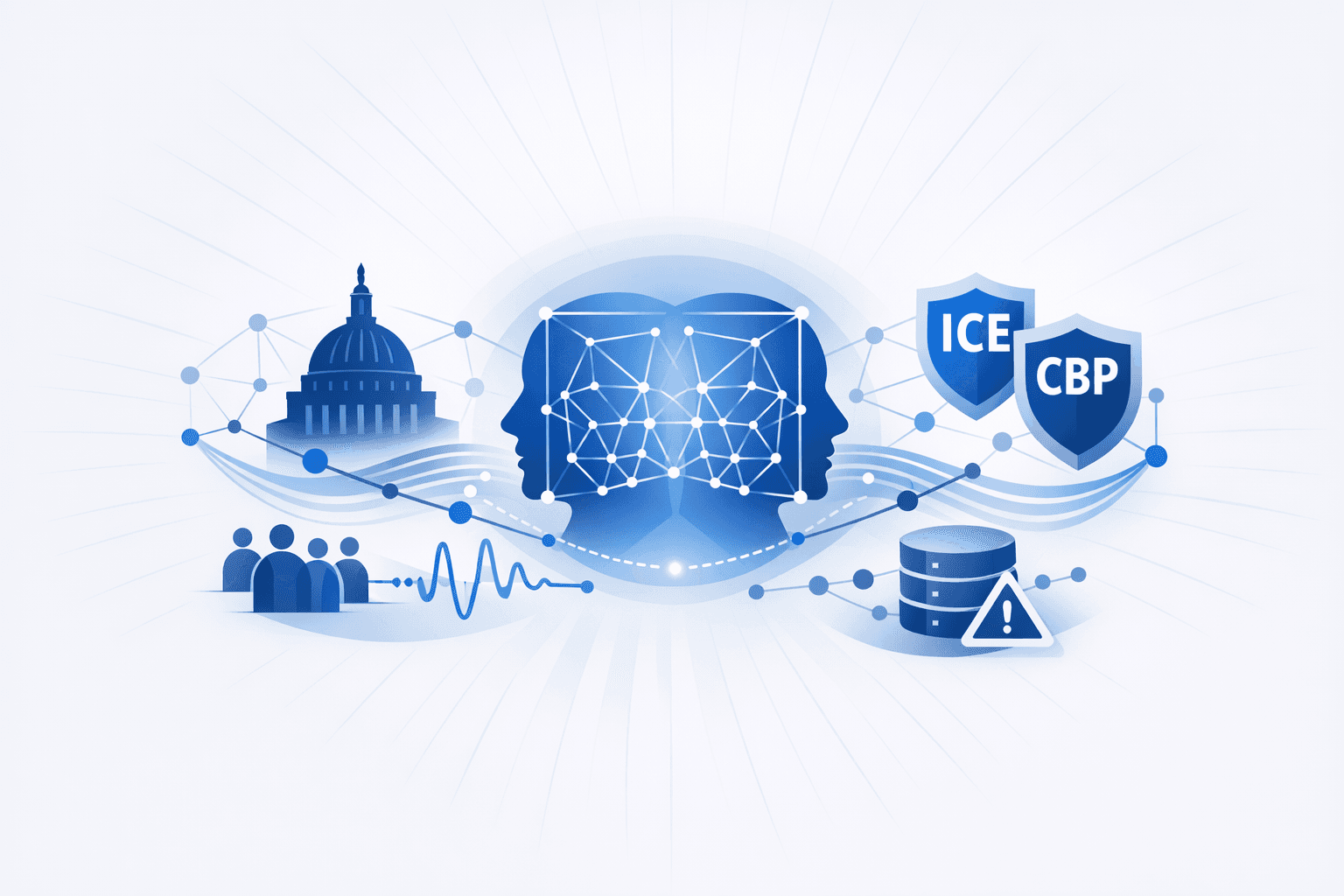
Congressional and civil-liberties backlash over ICE/CBP facial recognition and broader domestic surveillance authorities
US lawmakers and civil-liberties advocates are escalating scrutiny of **ICE** and **CBP** use of facial recognition amid reports that immigration agents have used face-scanning tools on people observing or protesting enforcement activity. Proposed legislation dubbed the **“ICE Out of Our Faces Act”** would seek to bar ICE/CBP facial recognition use, alongside related demands to limit tracking of First Amendment activity and questions about whether ICE maintains a “domestic terrorists” database tied to immigration protests. Separately, records reviewed by *WIRED* indicate DHS’s *Mobile Fortify* facial-recognition app—rolled out in 2025 to “determine or verify” identities during operations—cannot reliably **verify** identity and is intended at best to generate investigative leads; the reporting also describes DHS approving the tool after weakening centralized privacy reviews and removing department-wide limits on facial recognition. In parallel, Congress is debating the renewal of **FISA Section 702**, with lawmakers raising concerns that domestic surveillance authorities could be applied more broadly, including in support of immigration-related enforcement framed as a national security issue. Nextgov reports that transparency data shows intelligence agencies increased 702 searches in 2024 using identifiers linked to known or suspected Americans while pursuing foreign cyber and terrorism threats, even as the FBI reduced its own direct U.S.-person queries after new safeguards. A separate Nextgov item on an AI moratorium and sector-specific AI regulation is policy-focused and not directly tied to the ICE/CBP facial recognition deployments or Section 702 reauthorization debate described in the other reporting.
1 months ago
US Cyber and Intelligence Policy Debates Over Surveillance Authorities and Leadership Vacancies
US national security officials and lawmakers are weighing the future of key cyber and intelligence authorities and leadership posts. Lt. Gen. Josh Rudd, nominated to lead **NSA** and co-lead **U.S. Cyber Command**, told the Senate Intelligence Committee he supports **FISA Section 702**, arguing the foreign-intelligence collection authority is “indispensable” for threat insight and has “saved lives,” even as critics continue to press for warrant requirements when querying incidentally collected US-person communications. Separately, a Senate panel heard testimony describing how the US military has formalized a “**non-kinetic effects cell**” to integrate cyber operations, electronic warfare, and influence activities into mission planning and execution, with officials citing an operation in Venezuela that included cyber effects against radar, internet, and the power grid to induce a temporary blackout. A parallel policy dispute is playing out around domestic cyber defense leadership and information-sharing frameworks. An *SC Media* opinion column argues the Senate’s failure to confirm (and subsequent expiration of) Sean Plankey’s nomination as **CISA director** has prolonged a leadership vacuum during heightened critical-infrastructure risk, and it also highlights uncertainty around reauthorizing the **Cybersecurity Information Sharing Act of 2015** amid political resistance to a “clean” long-term extension. Overall, the reporting and commentary point to governance and oversight decisions—surveillance authorities, operational cyber integration, and agency leadership—that could materially affect US cyber posture, but they do not describe a discrete breach, vulnerability disclosure, or active threat campaign.
1 months ago
Trump Administration Expands Intelligence Access to Domestic Law Enforcement Data
The **Trump administration** is moving to loosen long-standing restrictions on sharing domestic law enforcement information with the **CIA and other intelligence agencies**, potentially opening access to databases containing hundreds of millions of records, including FBI case files, banking records, and investigative material involving law-abiding Americans. Officials said the changes are being justified as part of efforts to target drug cartels and other transnational criminal groups that the administration has designated as terrorists, but the process has reportedly unfolded with **little transparency, limited legal debate, and minimal notice to Congress**, raising significant civil-liberties concerns. The broader policy debate over U.S. surveillance powers is reflected in parallel criticism of **Section 702** reauthorization efforts, with privacy advocates arguing that existing authorities already enable excessive collection and weak safeguards for Americans' data. Proposed reforms in the **SAFE Act** are being presented as an attempt to impose stronger limits on surveillance and intelligence access, underscoring concern that the government is expanding intelligence collection and information-sharing authorities faster than oversight and privacy protections are being strengthened.
1 months ago