
AI-Assisted Cryptocurrency Investment Scams Targeting Japan via Malvertising and Pig-Butchering Tactics

Threat actors are running cryptocurrency investment scams across Asia—heavily targeting Japan—that blend malvertising (paid ads on platforms such as Facebook and Instagram) with pig butchering-style long-con social engineering. Infoblox reported identifying large clusters of suspicious domains (including domains consistent with registered domain generation algorithms (RDGAs)) disproportionately queried by users in Japan; victims are funneled from fake ads impersonating financial experts or “AI-driven” trading systems to lure sites that push them into messaging apps (e.g., LINE, WhatsApp, KakaoTalk) via links or QR codes. Once in chats, victims are engaged by AI bots posing as experts/assistants, fed fabricated success stories, and nudged from small “test” deposits to larger transfers; when victims attempt withdrawals, scammers demand additional payments such as a “release fee.” Reported losses tied to this activity have reached up to ¥10 million per victim.
A related pattern shows scammers using AI chatbots as high-pressure sales agents for fake crypto offerings: Malwarebytes documented a live “Google Coin” presale site using a chatbot impersonating Google’s Gemini branding to provide tailored investment projections and steer victims toward irreversible cryptocurrency payments; Google does not have a cryptocurrency. While this “Google Coin” case is a separate scam instance from the Japan-focused malvertising/pig-butchering operation, it reinforces the same operational shift highlighted by Infoblox: automation and AI-driven conversational tooling are increasingly replacing human operators to scale persuasion, maintain consistent scam personas, and accelerate victim conversion from initial interest to payment.
Timeline
Feb 17, 2026
Researchers identify a shared, scalable fraud ecosystem spanning 23,000 domains
Infoblox researchers reported that the campaign used a shared website framework, overlapping ad flows, and common analytics identifiers, suggesting a shared enablement layer or possible as-a-service model. They assessed the activity as expanding beyond Asia to English-, German-, and Spanish-speaking audiences, indicating a globalized and automated fraud operation.
Feb 17, 2026
Scammers demand release fees and inflict losses up to ¥10 million
Victim reports indicate the fraud culminated in direct transfers to scammers followed by demands for additional release fees to unlock fake profits. Reported individual losses reached as high as ¥10 million, or about US$63,000.
Feb 17, 2026
Victims are funneled into messaging apps for pig-butchering chats
After visiting lure sites, victims were directed into legitimate messaging apps including LINE, KakaoTalk, and WhatsApp through links or QR codes. There they were engaged in one-on-one and group chats that appeared automated or AI-assisted, using scripted conversations and fake success stories to build trust and drive larger deposits.
Feb 17, 2026
Malvertising campaign targets Asia, especially Japan
Operators launched ads on platforms such as Facebook and Instagram impersonating financial experts or promoting AI-based investing to lure victims in Asia, with a strong focus on Japan. The ads redirected users to fraudulent investment-themed websites designed to start the scam flow.
Jan 1, 2025
Scam infrastructure growth begins with large-scale domain registrations
DNS-led analysis found registration growth for the cryptocurrency scam ecosystem beginning in early 2025. Researchers ultimately linked more than 23,000 domains, including RDGA-generated and lookalike domains, to the operation.
See the full picture in Mallory
Mallory subscribers get deeper analysis on every story, including:
Who’s affected and how
Deep-dive technical analysis
Actionable next steps for your team
IPs, domains, hashes, and more
Ask questions and take action on every story
Filter by topic, classification, timeframe
Get matching stories delivered automatically
Related Entities
Threat Actors
Sources
Related Stories

Scams and Malware Abusing Google Branding to Steal Cryptocurrency
Security researchers reported multiple campaigns abusing *Google* branding to drive crypto theft. Malwarebytes identified a polished fraudulent “presale” site promoting a fake token called **“Google Coin”** and embedding a chatbot that impersonates **Google Gemini**; the bot delivers a scripted investment pitch, cites specific token pricing and a “2026 roadmap,” and steers victims toward sending irreversible cryptocurrency payments while avoiding verifiable corporate, regulatory, or registration details. Separately, Kaspersky’s Securelist detailed **BeatBanker**, an Android malware campaign targeting Brazil that spreads via phishing to a website masquerading as the **Google Play Store** (e.g., `cupomgratisfood[.]shop`) and distributing trojanized APKs such as a fake “INSS Reembolso” app. The malware combines a **cryptominer** with a **banking Trojan** capable of device hijacking and screen overlays, including swapping destination addresses during **USDT** transactions in apps like *Binance* and *Trust Wallet*; newer samples reportedly replaced the banking module with **BTMOB RAT** while retaining the broader infection chain and persistence techniques (including looping near-inaudible audio to resist termination).
1 months ago
Chainalysis Reports Surge in Crypto Scams Driven by Impersonation and AI-Enabled Fraud
Chainalysis reported that **cryptocurrency scams and fraud generated an estimated $17B in victim losses in 2025**, making it the largest year on record in its tracking, with at least **$14B observed on-chain** and expectations that totals will rise as additional illicit addresses are identified. The report attributes the increase to the continued industrialization of scam operations and infrastructure, including *phishing-as-a-service*, AI-generated deepfakes, and professional money-laundering networks, alongside major scam categories such as **pig butchering/romance scams** and HYIP-style schemes. Chainalysis also assessed that scam efficiency increased materially, citing a **253% YoY rise in average scam payment** (from **$782 in 2024** to **$2,764 in 2025**) and noting that **AI-enabled scams** can be significantly more profitable than traditional approaches. A key driver highlighted was the rapid growth of **impersonation scams**, which Chainalysis said rose roughly **1,400% YoY**, with average payments to those clusters up more than **600%**. One example cited was an **E‑ZPass-themed smishing campaign** that used fake toll-payment texts and lookalike sites to deceive victims; Chainalysis linked this activity to the Chinese-speaking group **“Darcula” / “Smishing Triad,”** and referenced reporting and legal action describing tooling and templates used to scale these lures. Separately, reporting on **AI deepfake impersonation** shows similar social-engineering dynamics outside of “crypto-only” contexts, including deepfakes impersonating religious figures to solicit donations and promote fraudulent crypto-related offers, reinforcing the report’s broader finding that **AI-assisted impersonation** is increasing the reach and credibility of scams.
1 months ago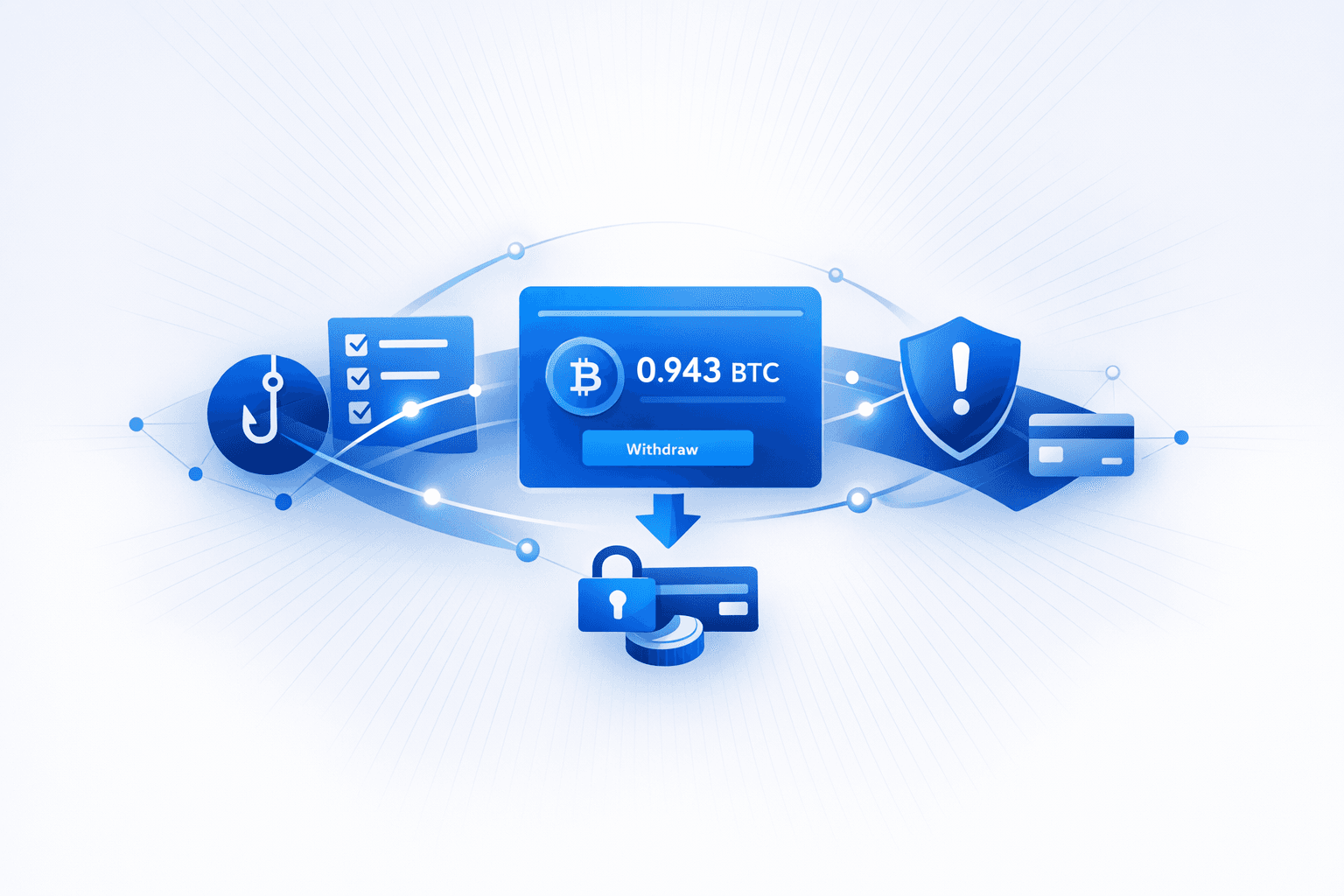
Consumer-Facing Phishing and Payment Scams Using Fake Support and Fraud Alerts
Multiple reports describe **social-engineering scams** that impersonate trusted brands and payment providers to drive victims into credential theft or direct monetary loss. A “crypto compensation” lure abuses a legitimate-looking *Yandex* poll as an entry point, then redirects victims to a fake Bitcoin payout page claiming an approved `0.943 BTC` transaction and imposes a small “commission”/fee to withdraw funds—classic advance-fee fraud wrapped in a polished, multi-step funnel (including a fake chat “support agent”). Separately, Japanese-language phishing emails impersonating **ANA**, **DHL**, and **myTOKYOGAS** show consistent infrastructure patterns (notably `.cn` domains in sender and landing-page URLs), suggesting a single operator or shared kit targeting Japanese-speaking recipients. Several consumer scam advisories highlight **SMS-based fraud alerts** that push targets to call attacker-controlled phone numbers, where scammers pose as “support” to steal **Apple ID/2FA codes** or payment details, or to coerce victims into moving money. One PayPal-themed case escalated to cash withdrawals handed to a courier after a victim called a number from an unsolicited text, illustrating how “fraud department” pretexts can transition from phishing to **cash-out theft**. Additional warnings cover lookalike payment sites (e.g., `payyourbill.aps medical.com`) and generic guidance on what to do after clicking a phishing link; these are broadly consistent with the same theme (phishing/payment fraud) but are not tied to a single, specific campaign or actor across all items.
Today