
ClickFix Social-Engineering Technique Using Fake CAPTCHA to Trigger Manual Command Execution

A ClickFix-style malware campaign has been observed using fake CAPTCHA pages on compromised websites to trick users into manually executing malicious commands, enabling initial access while evading controls that focus on downloaded files. In the reported activity, victims are prompted to copy a PowerShell command and run it themselves; the script then downloads additional stages from attacker infrastructure (including 91.92.240.219), verifies user interaction by checking clipboard activity, and proceeds through a multi-stage infection chain. The payload is an information stealer targeting data from 25+ web browsers, cryptocurrency wallets (e.g., MetaMask), and enterprise VPN configurations, with checks for virtualized environments and security tooling prior to exfiltration.
Separately reported threat activity in the same time window includes UnsolicitedBooker targeting Central Asian telecoms with phishing-delivered backdoors (LuciDoor and MarsSnake) and APT28 running Operation MacroMaze, which uses weaponized Office documents and INCLUDEPICTURE fields pointing to webhook[.]site URLs as a tracking mechanism and to support follow-on macro-based payload delivery. A video-style weekly briefing also mentions an evolution of ClickFix where an initial command uses nslookup and parses the response for execution, but it is a multi-topic roundup rather than a primary source on the fake-CAPTCHA infostealer campaign; a malware newsletter roundup is likewise a link collection and does not add specific, corroborating details about the ClickFix CAPTCHA infostealer operation.
Timeline
Apr 27, 2026
CyberProof identifies ClickFix variant using cmdkey and regsvr32
CyberProof researchers reported a new ClickFix variant that uses a fake Cloudflare CAPTCHA to trick victims into pasting a command into Windows Run, but replaces PowerShell with native Windows tools cmdkey and regsvr32. The attack loads a DLL from an attacker-controlled SMB share via a UNC path, executes it filelessly, and establishes persistence through a remotely fetched scheduled task named "RunNotepadNow."
Mar 29, 2026
Suspected Cloudflare edge compromise used for pastejacking attack
A March 2026 case study described a malicious reCAPTCHA-style prompt appearing on a static Astro website, with the author concluding the payload was injected at the Cloudflare delivery layer rather than from the origin server. The incident was characterized as a living-off-the-land pastejacking attack enabled through a compromised Cloudflare account or edge configuration.
Mar 26, 2026
Recorded Future links ClickFix clusters to Windows and macOS malware campaigns
Recorded Future’s Insikt Group reported five distinct ClickFix clusters using fake verification pages to trick victims into pasting malicious commands into Windows Run or macOS Terminal. The report linked the activity to cybercriminal operations and possible state-backed actors including APT28 and North Korea’s PurpleBravo, with payloads including NetSupport RAT, Odyssey Stealer, Lumma Stealer, and MacSync.
Mar 24, 2026
Researchers document SmartApeSG ClickFix campaign delivering four malware families
Internet Storm Center researchers observed the SmartApeSG (also tracked as ZPHP and HANEYMANEY) ClickFix campaign active on compromised websites as recently as 2026-03-24. They documented a single infection session that sequentially delivered Remcos RAT, NetSupport RAT, StealC, and Sectop RAT via fake CAPTCHA social engineering and staged payloads over several hours.
Mar 12, 2026
Breakglass details ClickFix campaign delivering NetSupport RAT v14.10
Breakglass Intelligence analyzed a March 2026 ClickFix campaign that used fake CAPTCHA pages to trick victims into running a PowerShell command or MSI installer that deployed NetSupport RAT v14.10. The report documented delivery from applicationhost17.com, persistence via an HKCU Run key, C2 traffic to 172.94.9.4:443, per-victim tracking IDs, and rapidly rotated hosting infrastructure.
Mar 1, 2026
BlackFog identifies Venom Stealer ClickFix MaaS campaign
BlackFog reported Venom Stealer as a malware-as-a-service platform using ClickFix-style lures such as fake CAPTCHA, update, SSL, and font-installation prompts on Windows and macOS. The stealer was described as persistently monitoring for newly saved Chrome credentials, bypassing Chrome protections via the CMSTPLUA COM interface, and supporting cryptocurrency wallet cracking and draining, with multiple updates observed in March 2026.
Feb 23, 2026
Polish police arrest suspect tied to Phobos ransomware
Polish authorities arrested a 47-year-old man in the Małopolska region for alleged links to the Phobos ransomware operation and seized devices containing hacking tools and stolen data.
Feb 23, 2026
ClickFix variant updated to use nslookup in initial execution
A later update to the widely observed ClickFix technique changed the initial command so it used nslookup to retrieve content that was then parsed and executed through the Windows Run dialog social-engineering flow.
Feb 23, 2026
KEENADU Android malware found pre-installed in tablets
Kaspersky reported that KEENADU Android malware was being pre-installed in tablet firmware before the devices were sold to consumers, indicating supply-chain style compromise affecting Android tablets.
Jan 1, 2026
Researchers identify updated ClickFix infostealer campaign
In early 2026, researchers identified a ClickFix-style campaign using fake CAPTCHA pages on compromised websites to trick users into manually running malicious PowerShell, leading to a multi-stage infostealer infection chain.
Dec 1, 2025
ARKANIX STEALER observed in the wild
Researchers reported the ARKANIX STEALER infostealer family as active in late 2025, primarily distributed through Discord communities and underground forums while posing as legitimate utilities.
Jul 11, 2025
Splunk publishes ClickFix analysis and releases ClickGrab and PasteEater
Splunk published an analysis of Fake CAPTCHA/ClickFix campaigns describing clipboard hijacking, fake reCAPTCHA lures, and hidden PowerShell execution patterns used to deliver malware. The company also introduced two defensive tools, ClickGrab for infrastructure and IOC analysis and PasteEater for detecting suspicious browser-origin clipboard content on Windows.
Jul 1, 2025
ClickFix targeted restaurant reservation systems
An earlier ClickFix campaign targeted restaurant reservation systems, establishing a precursor to later fake-CAPTCHA social-engineering activity. The reporting places this activity in July 2025.
Dec 31, 2024
ClickFix technique becomes globally widespread
Traficom states that the ClickFix social-engineering technique, first observed in late 2023, became significantly more widespread worldwide by the end of 2024. The technique tricks users into pasting attacker-supplied commands into Windows Run or similar interfaces, enabling malware execution.
May 8, 2023
Censys documents ClickFix campaign delivering XWorm V5.6
A Censys report described a ClickFix web-delivered malware campaign that used a five-stage infection chain to deliver XWorm V5.6. The report highlighted HTTP body hunting as the technique-based method used to identify and investigate the activity.
See the full picture in Mallory
Mallory subscribers get deeper analysis on every story, including:
Who’s affected and how
Deep-dive technical analysis
Actionable next steps for your team
IPs, domains, hashes, and more
Ask questions and take action on every story
Filter by topic, classification, timeframe
Get matching stories delivered automatically
Related Entities
Threat Actors
Malware
Organizations
Sources
5 more from sources like cyber security news, red canary blog and breakglass intel
Related Stories

ClickFix Social Engineering Drives Multi-Platform Malware Delivery
Security researchers reported multiple active campaigns using **ClickFix** social engineering—fake error dialogs or verification prompts that trick users into manually running attacker-supplied commands—to bypass browser and download protections and establish an initial foothold. In one enterprise case investigated by **CERT Polska (cert.pl)**, victims were lured via compromised websites showing a fake CAPTCHA/“fix” prompt that instructed them to paste and run a **PowerShell** command via `Win+R`; the script then downloaded a dropper and enabled rapid follow-on activity that can scale to **enterprise-wide compromise**, including deployment of secondary malware such as **Latrodectus** and **Supper** for data theft, lateral movement, and potential ransomware staging. A separate ClickFix operation targeted **macOS developers** by cloning the *Homebrew* site on typosquatted infrastructure; the “install” command was subtly altered to fetch content from `raw.homabrews.org` instead of `raw.githubusercontent.com`, leading to **Cuckoo Stealer** deployment and credential harvesting via repeated password prompts using macOS Directory Services, with related domains tied to shared hosting at **`5.255.123.244`**. ClickFix was also observed as the initial execution mechanism for the resurfaced **Matanbuchus 3.0** MaaS loader, which uses deceptive copy/paste prompts and **silent MSI** execution (via `msiexec`) to deliver a new payload, **AstarionRAT**, enabling capabilities including credential theft and **SOCKS5** proxying; operators were reported to move laterally quickly (including toward domain controllers), consistent with ransomware or data-exfiltration objectives.
1 months ago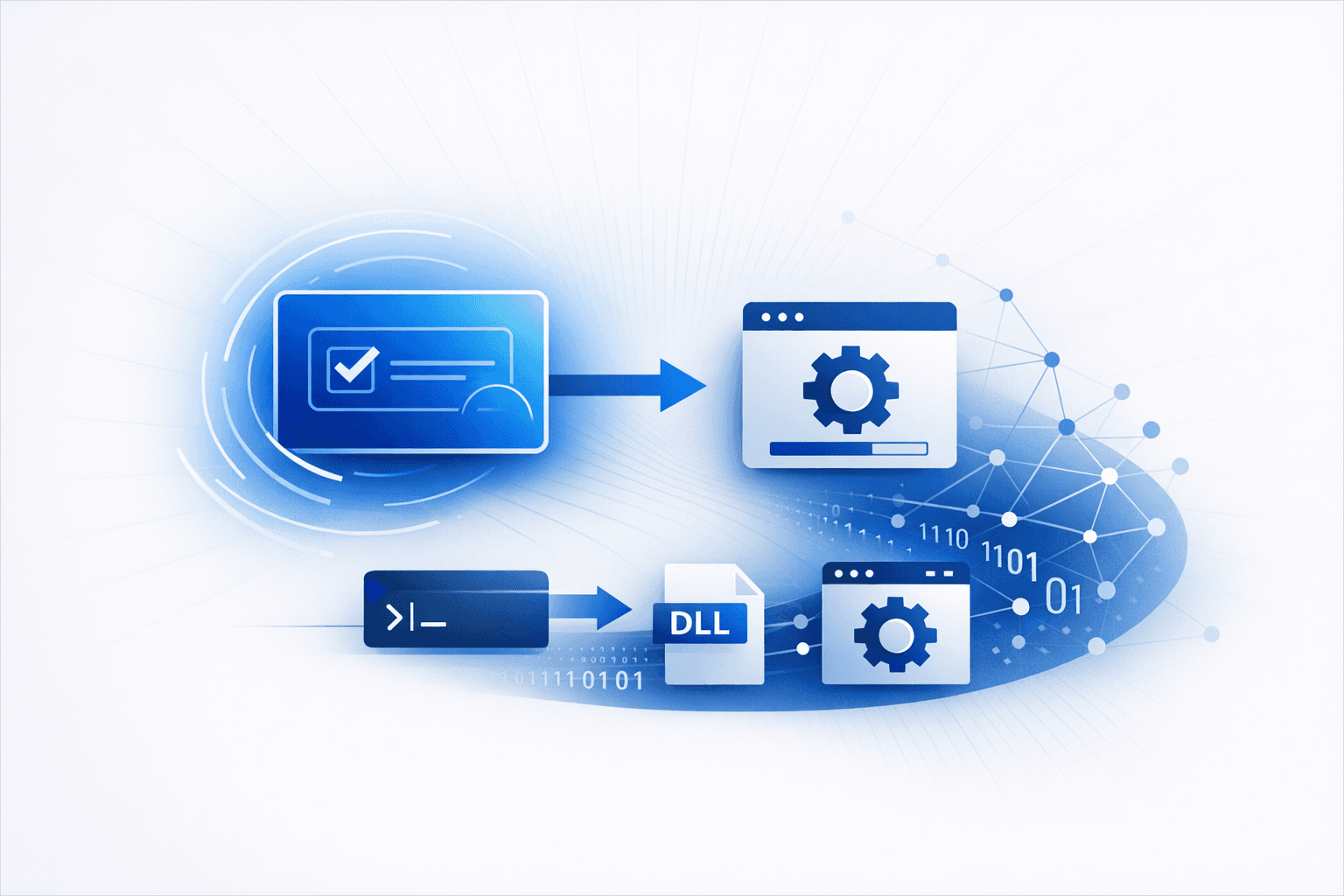
ClickFix Social-Engineering Campaigns Using Fake CAPTCHA and Fake Installer Pages
Security researchers reported multiple **ClickFix** campaigns that compromise endpoints by tricking users into manually executing attacker-provided commands rather than exploiting a software vulnerability. CERT Polska documented an incident response at a large Polish organization where a **fake CAPTCHA** prompt led a user to run a malicious snippet via *Win+R*, resulting in malware execution and suspected **DLL side-loading** from `%APPDATA%\Intel` (legitimate `igfxSDK.exe`/`version.dll` alongside a suspicious `wtsapi32.dll`). Investigators also identified additional suspicious DLLs in the user’s local AppData and recovered an execution trail consistent with a one-liner that fetched remote content and piped it into PowerShell (e.g., `cmd /c curl ... | powershell`). Separately, threat hunting research described a macOS-focused ClickFix operation using **typosquatted Homebrew** lookalike sites to present a “copy/paste” install command that runs in Terminal. The first-stage script repeatedly prompted for a password and validated it using `dscl authonly` to harvest working credentials before deploying a second-stage infostealer dubbed **Cuckoo Stealer**, which was reported to establish **LaunchAgent** persistence, remove quarantine attributes, and communicate over encrypted HTTPS C2 while targeting browser credentials/session tokens, Keychain data, notes/messaging artifacts, VPN/FTP configs, and cryptocurrency wallets. Both reports highlight ClickFix as an increasingly common, opportunistic initial access technique that scales by abusing trusted user workflows on Windows and macOS.
1 months ago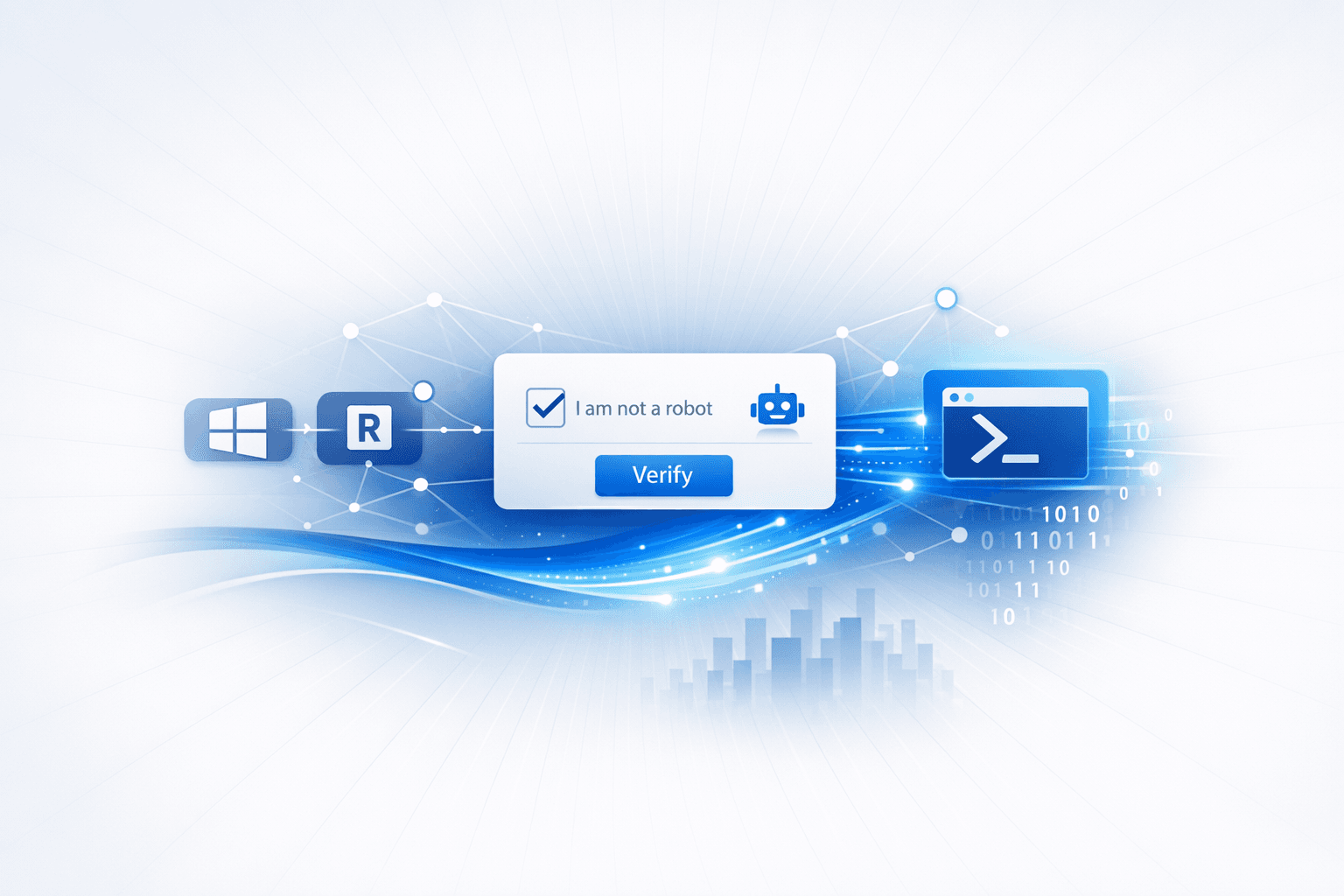
Fake CAPTCHA (ClickFix) Social Engineering Used for Fileless Malware Delivery
Security researchers reported an active malware distribution technique that abuses **bogus CAPTCHA** pages to trick users into executing attacker-supplied commands on Windows. In the **ClearFake** campaign analyzed by Expel, victims land on a compromised site and are instructed to press `Win + R`, then paste and run a clipboard-seeded command—an approach commonly referred to as **ClickFix**—which results in malicious **PowerShell** execution. The campaign emphasizes *living-off-the-land* tradecraft and evasion, including **proxy execution** by abusing the trusted Windows script `C:\Windows\System32\SyncAppvPublishingServer.vbs` to launch PowerShell in hidden mode and reduce the chance of AV detection. Separate measurement and telemetry on the same broader tactic found large-scale infrastructure supporting fake CAPTCHA lures: a Censys analysis identified **9,494** breached websites hosting counterfeit verification pages, with ~**70%** appearing nearly identical. The most common infection mechanisms involved **clipboard manipulation** leading to **VBScript** and **PowerShell** execution (with significant counts of each observed), alongside other delivery paths such as `MSIEXEC`-based installation of malicious Windows Installer packages. Researchers also observed use of the **Matrix** push command-and-control framework to support **fileless** deployment, noting that these intrusions can leave no traditional executable artifacts and may evade signature-based detection.
1 months ago