
Nearby Glasses Android App Detects Smart Glasses via BLE Manufacturer IDs
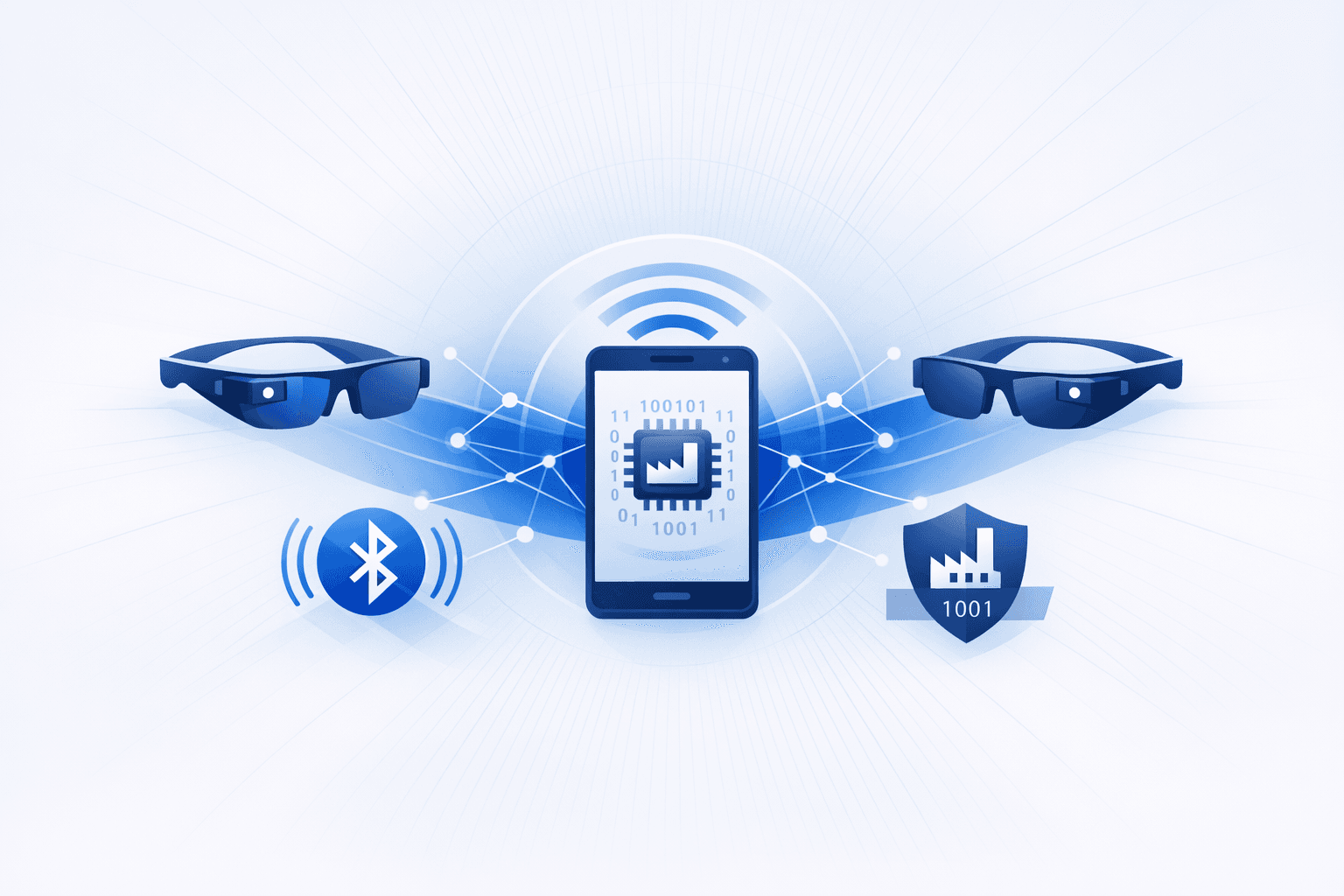
An Android app called Nearby Glasses was released to alert users when certain camera-equipped smart glasses are nearby by scanning Bluetooth Low Energy (BLE) advertising traffic for manufacturer company IDs (Bluetooth SIG-assigned identifiers) rather than device names, MAC addresses, or service UUIDs, which can be inconsistent or randomized. The app, developed by Yves Jeanrenaud (Darmstadt University of Applied Sciences), runs as a foreground service and triggers notifications when detected devices meet a configurable RSSI threshold (reported default around -75 dBm, roughly 10–15 meters in open space). Reported monitored IDs include Meta/Luxottica and Snapchat-related identifiers, and users can add custom hex values to expand detection.
Reporting highlighted that the approach can generate false positives, particularly from other Bluetooth devices made by the same vendors (e.g., other Meta hardware), and the project documentation warns against using detections to harass people. The app’s emergence is framed as a response to growing privacy concerns and reported misuse of smart glasses for non-consensual recording and demonstrations of real-time facial recognition using glasses paired with public data; coverage also notes legal and regulatory risk areas (e.g., state wiretapping laws) and ongoing debate over the effectiveness of recording indicator lights and the potential for those indicators to be disabled.
Timeline
Feb 26, 2026
Meta reiterates recording-light and legal-compliance position on its smart glasses
In response to concerns highlighted alongside the app's release, Meta said its glasses include a recording indicator light and that users are responsible for complying with applicable laws. Reporting noted ongoing concerns that indicator lights could be disabled and that use of such devices may create privacy and wiretapping-law risks.
Feb 26, 2026
Developer outlines privacy motivation and safeguards for Nearby Glasses
At launch, the project was framed as a response to privacy concerns around smart glasses, including reported non-consensual recording incidents and demonstrations of facial recognition on Meta Ray-Ban glasses. The developer said the app collects no telemetry, may keep only a local log, and warned users not to harass people based on detections.
Feb 26, 2026
Nearby Glasses Android app is released to detect nearby smart glasses
Yves Jeanrenaud of Darmstadt University of Applied Sciences released Nearby Glasses, an Android app that scans Bluetooth Low Energy advertising traffic to alert users when certain smart glasses are nearby. The app identifies devices using stable Bluetooth SIG manufacturer company IDs associated with vendors such as Meta, Luxottica, and Snapchat, while acknowledging possible false positives from other products by the same companies.
See the full picture in Mallory
Mallory subscribers get deeper analysis on every story, including:
Who’s affected and how
Deep-dive technical analysis
Actionable next steps for your team
IPs, domains, hashes, and more
Ask questions and take action on every story
Filter by topic, classification, timeframe
Get matching stories delivered automatically
Related Entities
Organizations
Sources
Related Stories
Privacy Risks of Smart Glasses in Healthcare Environments
Smart eyewear devices such as Meta Ray Ban glasses, equipped with microphones, cameras, and AI connectivity, present significant privacy and data security risks when used in hospital settings. These devices can inconspicuously record or livestream protected health information (PHI), including patient images and conversations, often without the knowledge or consent of those being recorded. The presence of a small LED indicator is insufficient as a safeguard, especially since third-party products exist to obscure the light, making unauthorized recording even harder to detect. Healthcare organizations face challenges as these are often unmanaged devices brought in by patients or staff, bypassing institutional controls and oversight. The direct connectivity of these glasses to social media platforms like Facebook and Instagram increases the risk of inadvertent or malicious disclosure of sensitive information, potentially violating HIPAA/HITECH regulations. The inconspicuous nature of smart glasses differentiates them from more obvious recording devices like smartphones, heightening the risk of unnoticed privacy breaches in clinical environments.
1 months ago
Meta Ray-Ban Smart Glasses Recordings Reviewed by Human Contractors, Triggering Privacy Scrutiny
Investigations reported by Swedish outlets *Svenska Dagbladet* and *Göteborgs-Posten* found that recordings captured by **Meta Ray-Ban smart glasses**—including video and audio—are being reviewed by human contractors as part of AI training and quality assurance workflows. Workers employed by **Sama**, a Meta subcontractor in **Nairobi, Kenya**, described routinely handling highly sensitive content inadvertently recorded by users, including bathroom visits, undressing, sex/pornography, and private conversations, as well as incidental capture of **bank cards** and other identifying details; interviewees said they feared reprisals for raising concerns and described strict on-site controls intended to prevent leaks. Following the reporting, the UK’s privacy regulator, the **Information Commissioner’s Office (ICO)**, confirmed it is contacting Meta to ask questions about the devices and associated data-handling practices. While Meta’s terms reportedly disclose that some interactions may be reviewed by humans to improve the system, the reporting and worker accounts suggest the review pipeline can include intimate or identifying moments that wearers may not expect to be viewed by third parties, raising regulatory and reputational risk around consent, transparency, and safeguards for bystander and user privacy.
1 months ago
Expansion of AI-Enabled Camera Surveillance Raises Privacy and Biometric Identification Concerns
The New York Metropolitan Transportation Authority (MTA) is testing new subway gates that use **AI-powered cameras** to capture short recordings when riders are suspected of fare evasion and to generate a physical description that is transmitted to the MTA, prompting criticism from privacy advocates concerned about persistent monitoring in public transit. The MTA has also solicited vendor input for systems using computer vision and AI to detect “unusual or unsafe behaviors,” reflecting broader growth in surveillance deployments across New York City. In parallel, consumer **AI smart glasses** are re-emerging with built-in cameras and microphones, intensifying concerns that everyday wearables can enable covert recording and downstream biometric identification. Reporting highlighted that footage from *Ray-Ban Meta* smart glasses can be paired with external facial-recognition services to identify strangers, and noted policy issues such as cloud storage of wake-word voice recordings (potentially retained up to a year) and uncertainty about future features like on-device facial recognition; retailers in New York (e.g., Wegmans and others) are also expanding facial-recognition use, underscoring the convergence of AI, biometrics, and surveillance in both public and commercial spaces.
1 months ago