
AI Security Governance and Emerging AI-Enabled Threats in Enterprise Environments
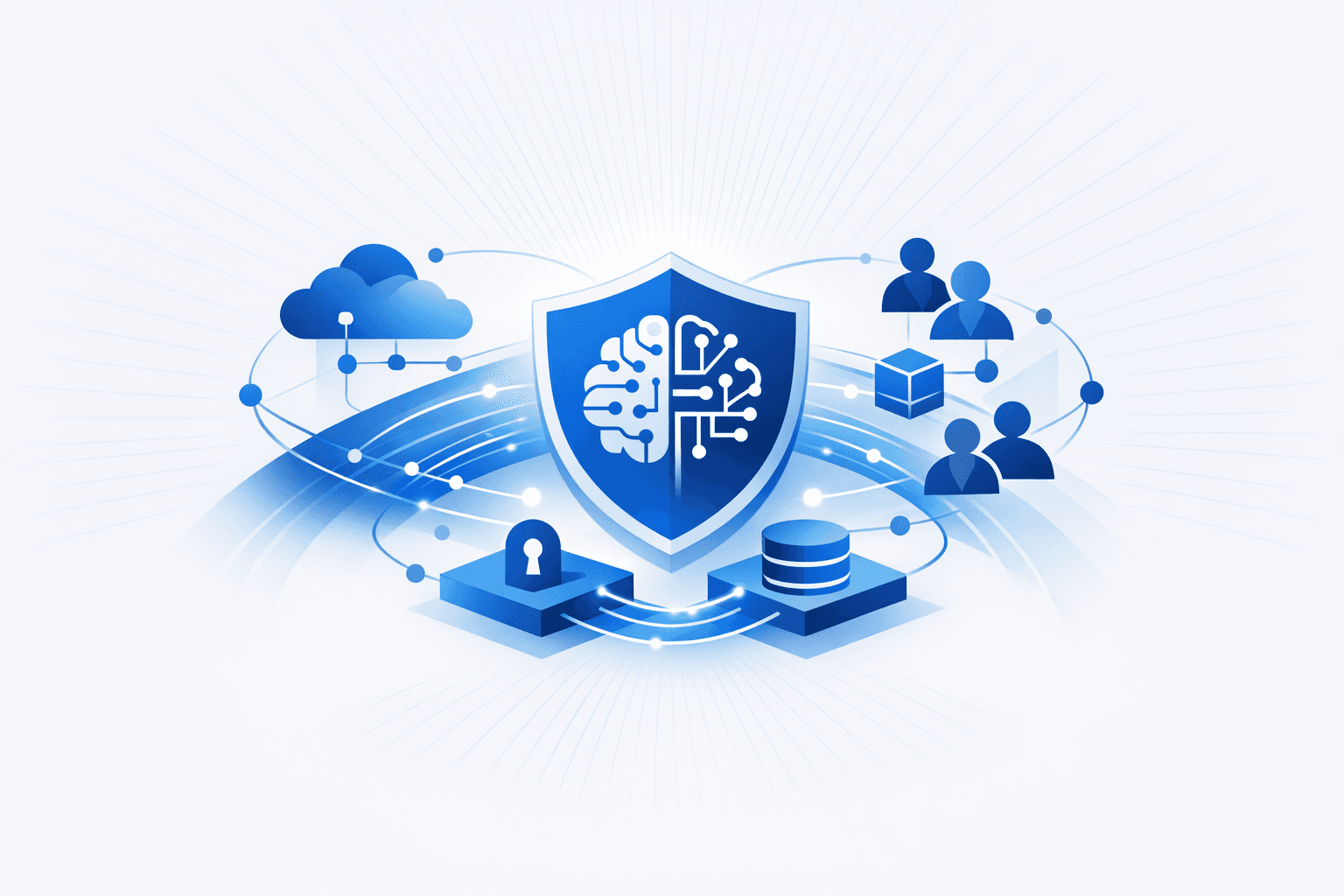
Security and media reporting highlighted growing enterprise exposure created by AI agents and the expanding ecosystem around the Model Context Protocol (MCP). AWS detailed new IAM governance controls for AWS-managed remote MCP servers, introducing standardized context keys aws:ViaAWSMCPService and aws:CalledViaAWSMCP to differentiate agent-initiated API calls from human activity and enable tighter policy enforcement, with additional network perimeter controls (VPC endpoint support) planned. Separately, AI governance startup JetStream announced a $34M seed round to provide visibility and control over AI behavior in production, explicitly targeting MCP server/key sprawl and cost/accountability concerns; multiple commentaries also warned that AI-driven development and “AI ultimatums” can increase IP theft and governance risk if organizations lack clear controls and monitoring.
Threat-focused coverage underscored that AI is also accelerating offensive capability and complicating defense. CSO Online reported AI-powered attack kits moving into open source (including tooling referenced as CyberStrikeAI), lowering barriers for cybercrime and enabling faster iteration of malicious tradecraft. In parallel, FBI messaging emphasized that Salt Typhoon activity remains ongoing following prior compromises of sensitive US telecom infrastructure, reinforcing the need for stronger government–telecom partnerships and improved readiness against Chinese cyber operations (including the FBI’s Operation Winter SHIELD focus on preparedness and faster intel sharing). Additional technical threat-hunting research described operationalizing Cobalt Strike C2 feeds via API automation for SIEM/EDR use, noting continued rapid infrastructure rotation and increased association with state-backed espionage and advanced ransomware operations, while a Dark Reading podcast recapped Interpol-supported law-enforcement disruption of an African cybercrime syndicate (hundreds of arrests and multiple malware decryptions).
Timeline
Mar 4, 2026
Operation Sentinel disrupts African cybercrime syndicates across 19 countries
Interpol coordinated Operation Sentinel across 19 countries, resulting in 574 arrests, recovery of more than $3 million, takedown of over 6,000 malicious links, and decryption of six malware or ransomware variants.
Mar 3, 2026
FBI expands Operation Winter SHIELD against Chinese cyber threats
FBI Assistant Director Brett Leatherman said Operation Winter SHIELD is being used to improve U.S. readiness for growing Chinese cyber threats and accelerate intelligence sharing with industry.
Mar 3, 2026
JetStream Security announces $34 million seed round
AI governance startup JetStream Security disclosed a $34 million seed financing led by Redpoint Ventures to build visibility and control for enterprise AI systems and MCP environments.
Mar 2, 2026
AWS plans VPC endpoint support for managed MCP servers
AWS said it plans to add VPC endpoint support for AWS-managed MCP servers, enabling private connectivity and additional network-level controls for regulated environments.
Mar 2, 2026
AWS introduces IAM context keys for managed MCP servers
AWS announced new IAM context keys, aws:ViaAWSMCPService and aws:CalledViaAWSMCP, to help customers distinguish and govern AI-agent-initiated API calls on AWS-managed MCP servers.
Mar 2, 2026
FBI says Salt Typhoon threat remains active
An FBI deputy assistant director for cyber intelligence publicly said Salt Typhoon activity is still ongoing and called for stronger collaboration between government and telecom providers.
Jan 1, 2024
Salt Typhoon compromises U.S. telecom lawful intercept infrastructure
In 2024, the Chinese threat actor Salt Typhoon compromised parts of U.S. telecommunications wiretap infrastructure, establishing a long-term intrusion into sensitive national infrastructure.
See the full picture in Mallory
Mallory subscribers get deeper analysis on every story, including:
Who’s affected and how
Deep-dive technical analysis
Actionable next steps for your team
IPs, domains, hashes, and more
Ask questions and take action on every story
Filter by topic, classification, timeframe
Get matching stories delivered automatically
Related Entities
Threat Actors
Organizations
Affected Products
Sources
5 more from sources like govinfosecurity, huntio blog, cso online, aws security blog and vulnu
Related Stories
AI-Enabled Threats and Security Failures Across Edge Devices, AI Agents, and Infostealer Campaigns
Threat actors are increasingly operationalizing AI and automation to scale attacks and exploit weak controls across both enterprise and consumer environments. An open-source offensive platform dubbed **CyberStrikeAI**—a Go-based “AI-native security testing” framework integrating 100+ tools—was observed in infrastructure used to target **Fortinet FortiGate** edge devices at scale; researchers linked activity to an IP (212.11.64.250) exposing a `CyberStrikeAI` banner and to scanning/communications patterns consistent with mass exploitation. Separately, a newly disclosed and rapidly patched **OpenClaw** vulnerability showed how AI agent tooling can be hijacked: researchers reported that a malicious website could take over a developer’s locally running agent due to inadequate trust-boundary validation, prompting urgent upgrades to **OpenClaw v2026.2.25+**. In parallel, a “vibe-coding” hosted app on the *Lovable* platform leaked data impacting **18,000+ users** after a researcher found **16 flaws (six critical)** tied to mis-implemented backend controls (including missing/incorrect row-level security in *Supabase*), enabling unauthorized access to records and actions like bulk email and account deletion. Criminal monetization also continues to evolve beyond AI-agent risks. **AuraStealer**, a Russian-language infostealer positioned as a successor/competitor after Lumma disruptions, was advertised on multiple underground forums and is supported by a sizable C2 footprint; analysis of 200+ samples identified **48 C2 domains**, with operators abusing low-cost TLDs (e.g., `.shop`, `.cfd`) and using **Cloudflare** as a reverse proxy to mask origin infrastructure. Broader reporting and commentary reinforced that identity and access failures remain a dominant breach driver and that AI adoption is expanding the attack surface via over-privileged agents and “shadow AI,” while ransomware operators increasingly target recovery paths (including backups) and dwell to corrupt restore points. Several items in the set were non-incident thought leadership or workforce content (skills gap, jobs listings, awards, and general AI security tips) and did not add event-specific technical details beyond high-level risk framing.
1 months ago
AI-driven security discourse highlights bug-finding gains, identity risks, and largely generic guidance
Coverage this week emphasized how **AI is accelerating both offense and defense**, but most guidance remained high-level rather than tied to a single incident. The FBI warned that criminals and nation-states are using AI to increase the *speed* of intrusions while still following familiar kill-chain steps, urging organizations to double down on fundamentals such as MFA, hardening internet-facing/edge assets, and credential abuse detection; CISA leadership echoed the focus on removing unsupported edge devices. Separate reporting and commentary highlighted AI’s growing impact on software assurance: Microsoft Azure CTO Mark Russinovich described using Anthropic’s *Claude Opus 4.6* to analyze decades-old assembly code and surface subtle logic flaws, while open-source maintainers reported being inundated with low-quality, AI-generated vulnerability reports even as AI-assisted analysis can also increase discovery of high-severity bugs (e.g., Mozilla’s red-teaming claims). Several items were **notable but not part of a unified event**: CSO Online reported the **CVE program’s funding was secured**, reducing near-term continuity risk for vulnerability enumeration, and separately covered **post-quantum cryptography (PQC)** planning uncertainty as vendors compete for early advantage. Other pieces were primarily opinion, best-practice, or event content—e.g., “shadow AI” governance steps, SOC preparation for agentic AI, OT/IoT security commentary, cloud-security leadership takes, and a conference session roundup—providing general risk framing rather than actionable incident-specific intelligence. One concrete threat report described a **software supply-chain lure** in which developers searching for *OpenClaw* were redirected to a **GhostClaw RAT**, reinforcing ongoing risk from trojanized tooling and search-driven malware delivery, but it was not connected to the broader AI/governance narratives in the rest of the set.
1 months ago
AI-driven security and governance challenges across enterprises and government
Public- and private-sector security leaders are increasingly treating **AI adoption as inseparable from cybersecurity**, citing governance, workforce, and operational impacts. U.S. government-focused commentary argues agencies must build “cyber-AI” capability across education pipelines and critical infrastructure, as AI simultaneously improves detection/response and enables faster phishing, malware development, and adaptive attacks. Enterprise security coverage echoes the governance challenge: attempts to **ban AI-enabled browsers** are expected to drive “shadow AI” usage, with concerns including sensitive-data leakage to third parties and **prompt-injection** risks; separate reporting highlights friction between developers and security teams as AI-accelerated delivery increases firewall rule backlogs and delays, pressuring organizations to automate controls without weakening oversight. Threat and risk reporting also points to concrete shifts in attacker tradecraft and defensive tooling. Cloudflare’s *Cloudforce One* threat report describes **infostealers** (e.g., **LummaC2**) stealing live session tokens to bypass MFA, heavy automation in credential abuse (bots dominating login attempts), and a ransomware initial-access pipeline increasingly tied to infostealer activity; it also notes a coordinated disruption effort against LummaC2 infrastructure and expectations of successor variants that compress time-to-ransomware. In parallel, AppSec commentary describes Anthropic’s **Claude Code Security** as a reasoning-based code scanning and patch-suggestion capability that claims to identify large numbers of previously unknown high-severity issues, but still requires human approval and does not replace production AppSec programs; other items in the set are largely non-incident thought leadership (skills gap, secure-by-design, AI security “tactics,” and workforce resilience), plus unrelated content (awards, job listings, quantum-resistant data diode product coverage, and an AI nuclear wargame study).
1 months ago